Spatial & Experiential Designer

STONE THAT STEPS OUTSIDE THE FORM IT WAS GIVEN

Non Finito

BreakingtheHabitofBeingAssigned.Astudyofthebodycaughtbetweenformationandrelease,testedfromthescaleofanobjecttothescaleofasquare.

STONE THAT STEPS OUTSIDE THE FORM IT WAS GIVEN

Non Finito

BreakingtheHabitofBeingAssigned.Astudyofthebodycaughtbetweenformationandrelease,testedfromthescaleofanobjecttothescaleofasquare.

STONE THAT STEPS OUTSIDE THE FORM IT WAS GIVEN

Non Finito

BreakingtheHabitofBeingAssigned.Astudyofthebodycaughtbetweenformationandrelease,testedfromthescaleofanobjecttothescaleofasquare.

Weight, and inside it a form that has not settled yet.

01

Weight

The figure sits low in the mass it carries. That weight is where every study on this page begins, and it never fully leaves.

02

Possibility

In the same frame the form is resolving. What the material has been given and what it could become are visible at the same time.

03

Turning

Seen from another side the balance shifts: more stone here, more body there. Nothing about the state is settled.

Scroll
01Weight, and what is still appearing

Thesestudiesbeginwithweight,andwithsomethingstillappearinginsideit.

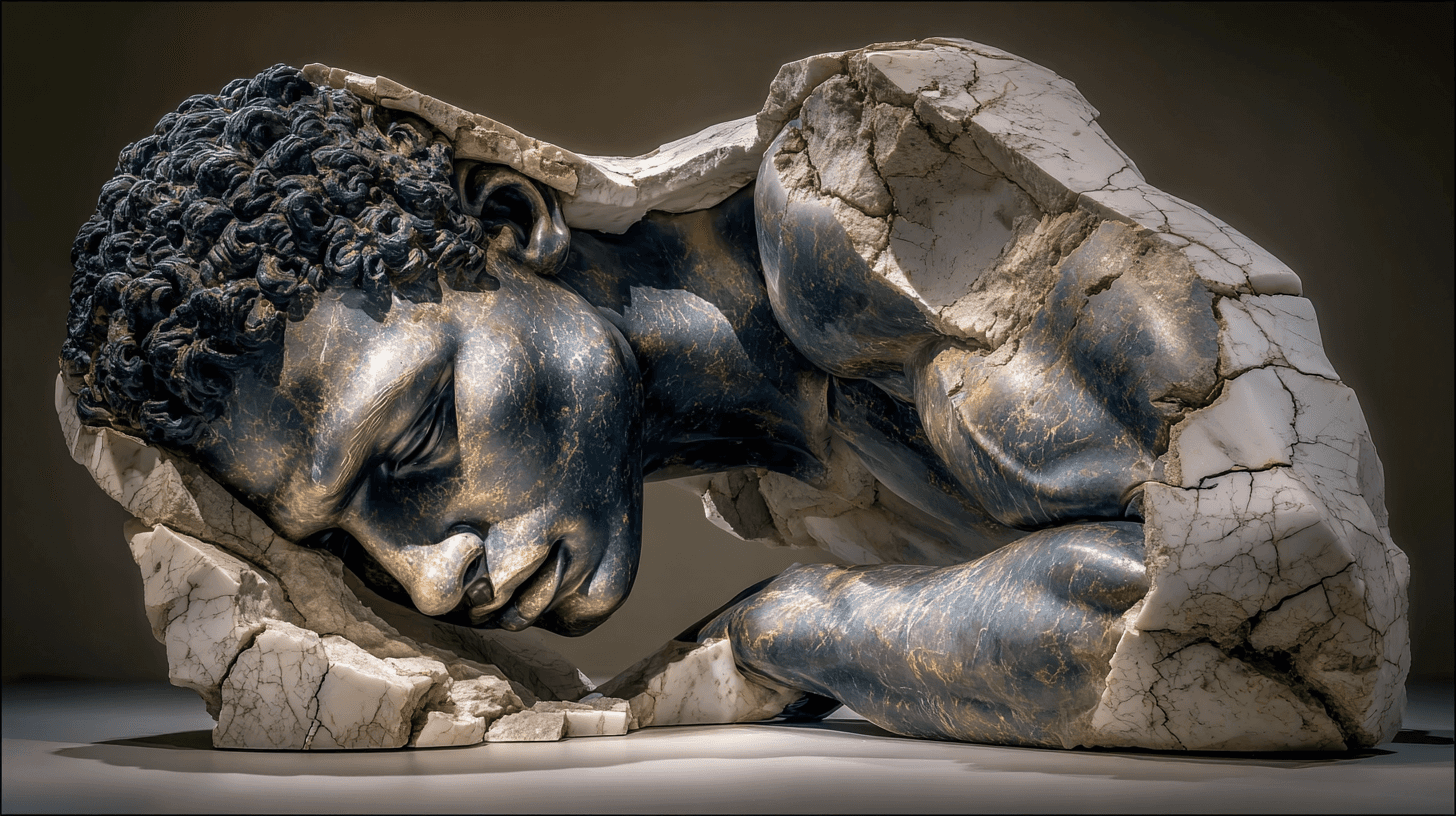
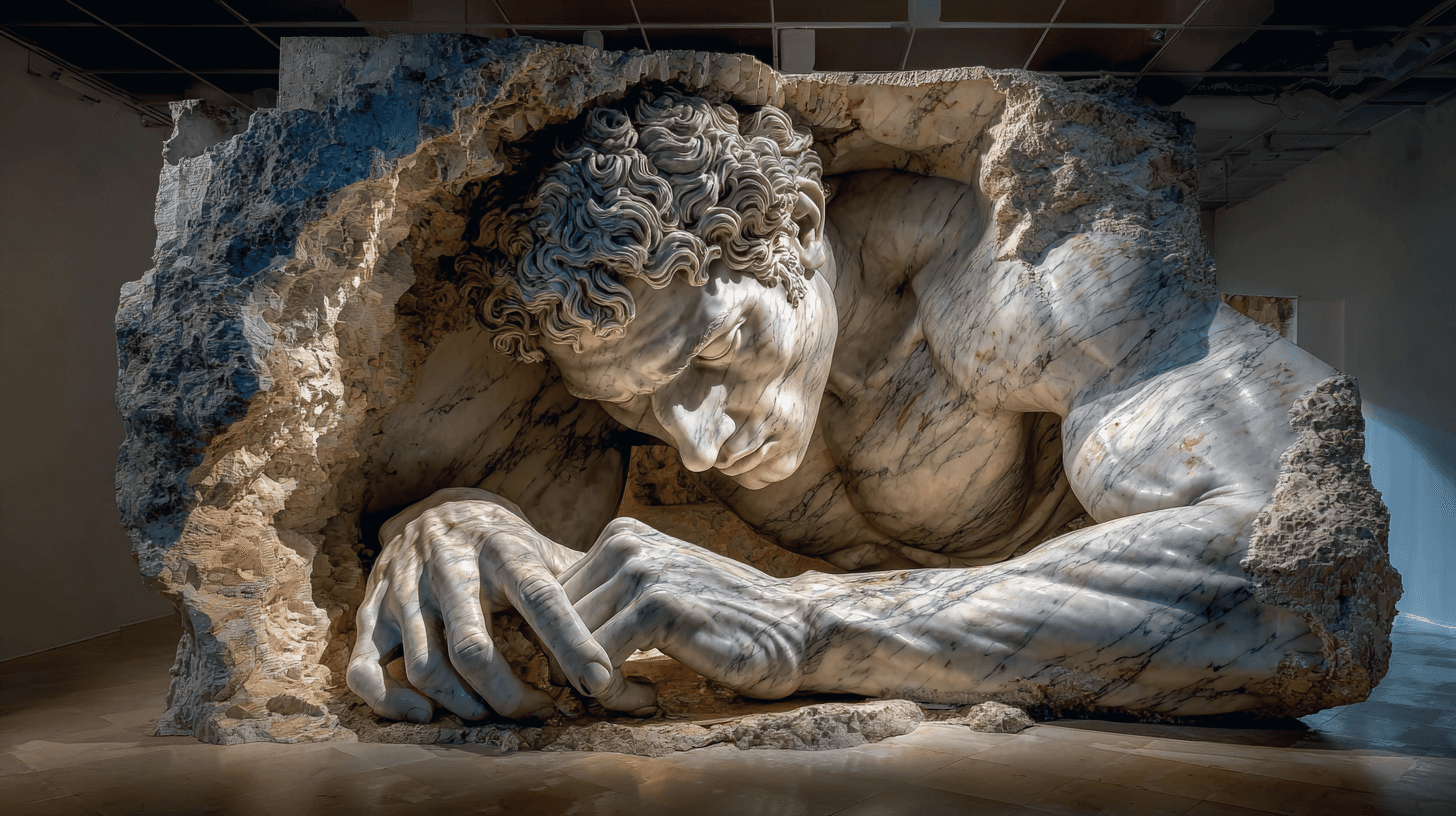
The body sits low in the mass it carries, head down, shoulders under the load. That is the weight of existing. In the same frame the figure is still arriving: in one place the form has resolved, in another it is still material. Non finito, here, is both of those being visible at once.
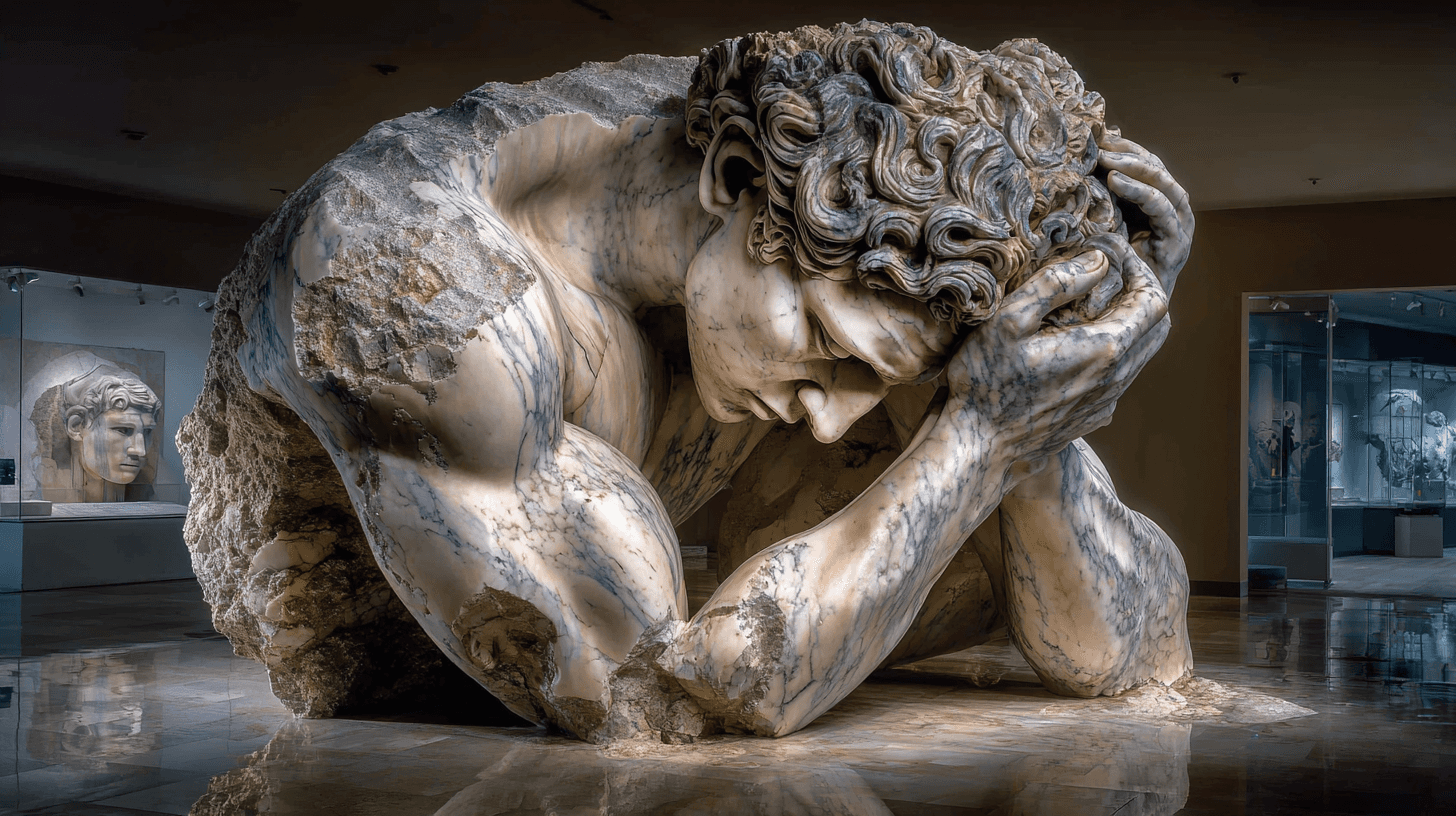
A body low inside the mass it carries

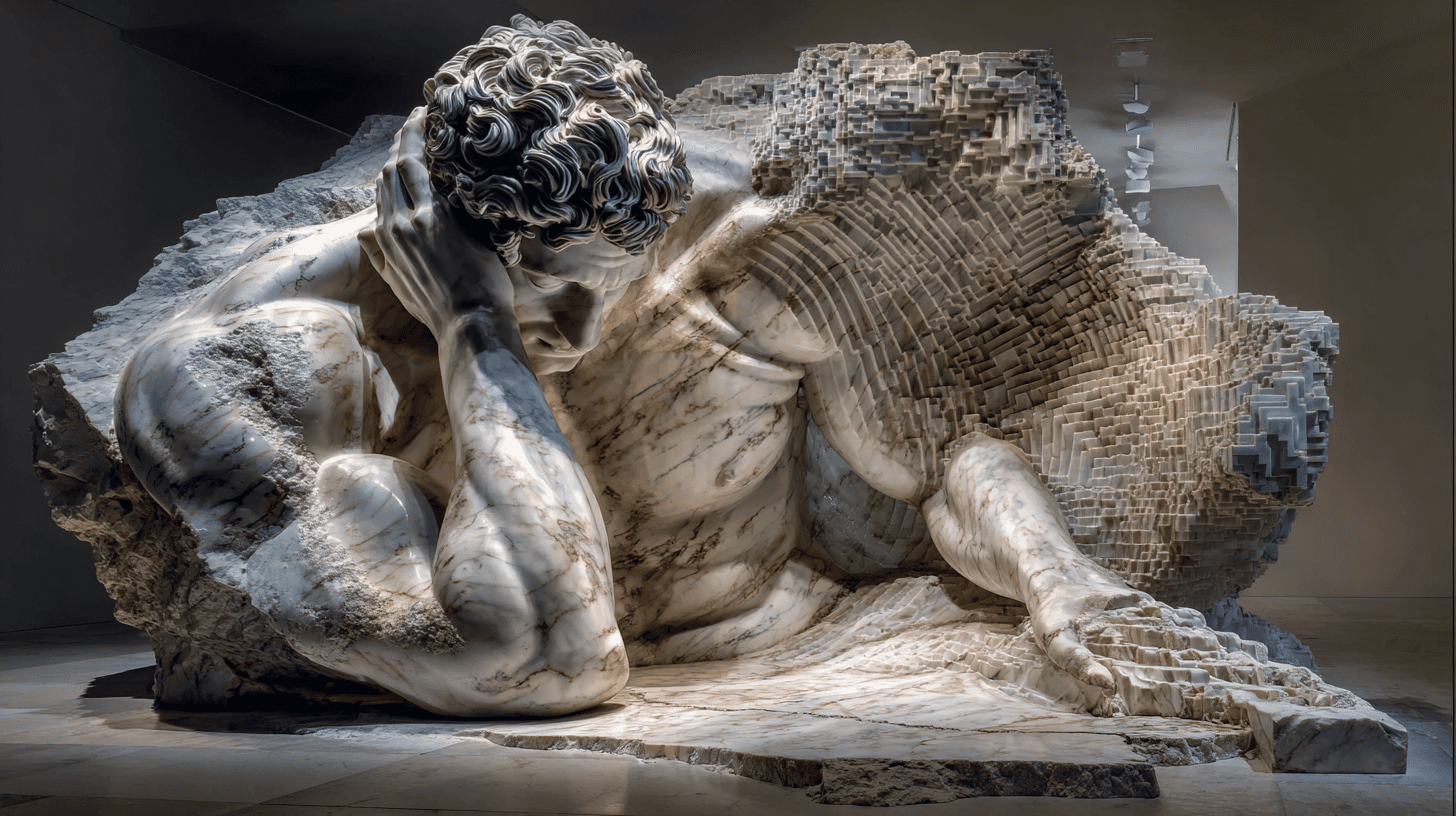
Nothing in these pieces is settled yet. The surface changes as it travels, from stone to body and back again, and the state it is caught in matters more than the pose. What is unfinished is not missing. It is still open.
The surface moving between stone and body
02What the material could become

I imagine the stone remembering itself, and beginning to explore the forms it could take. Each study holds that idea at a different intensity: what the material has been given, and what it is starting to become, stay in the same frame.
01/ 04Pressure
Pressure
Turning
Cover
Spreading
The mass still holds almost all of it. The figure reads as a force inside the stone rather than a shape on it.
03Close to the surface

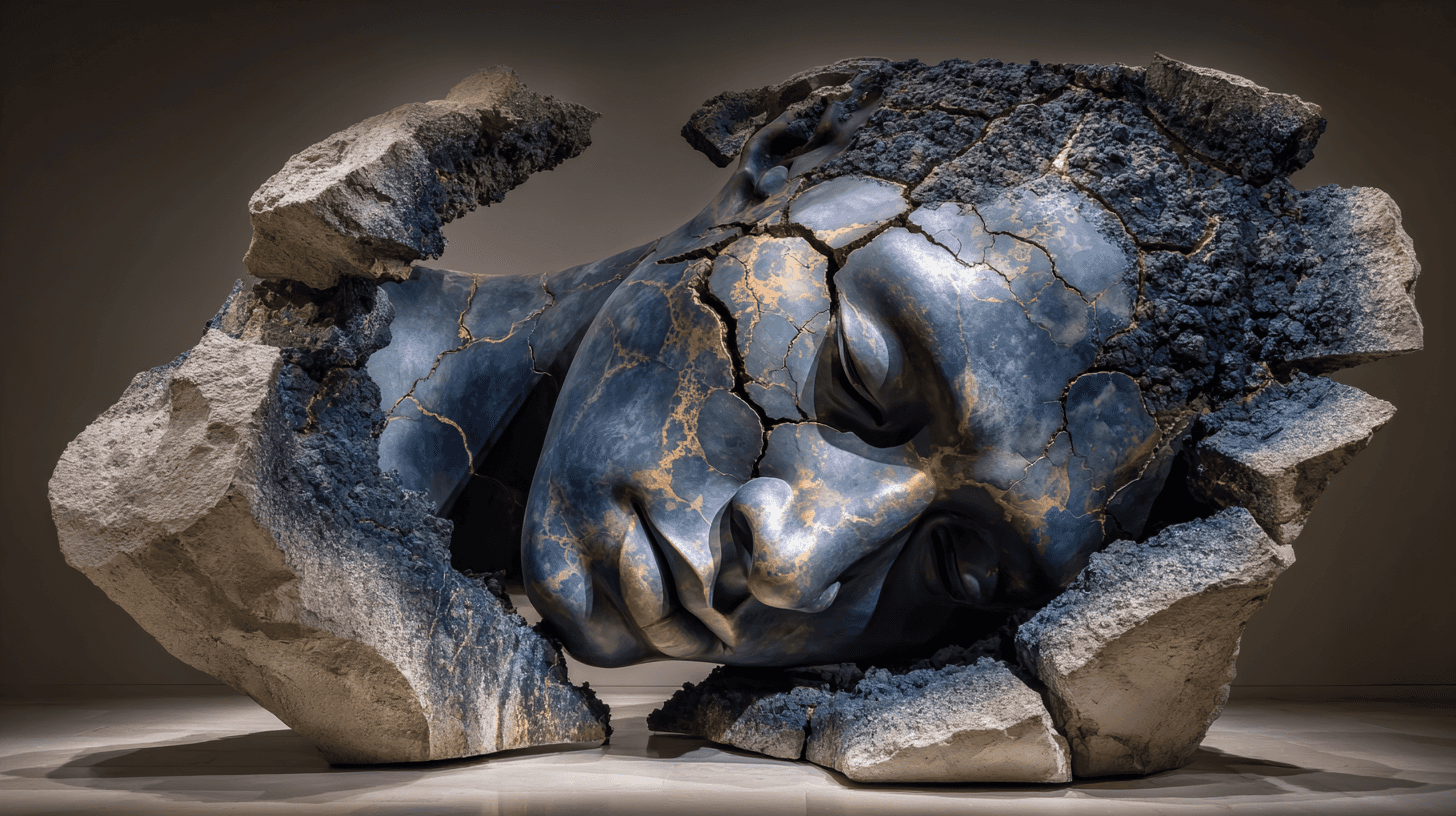
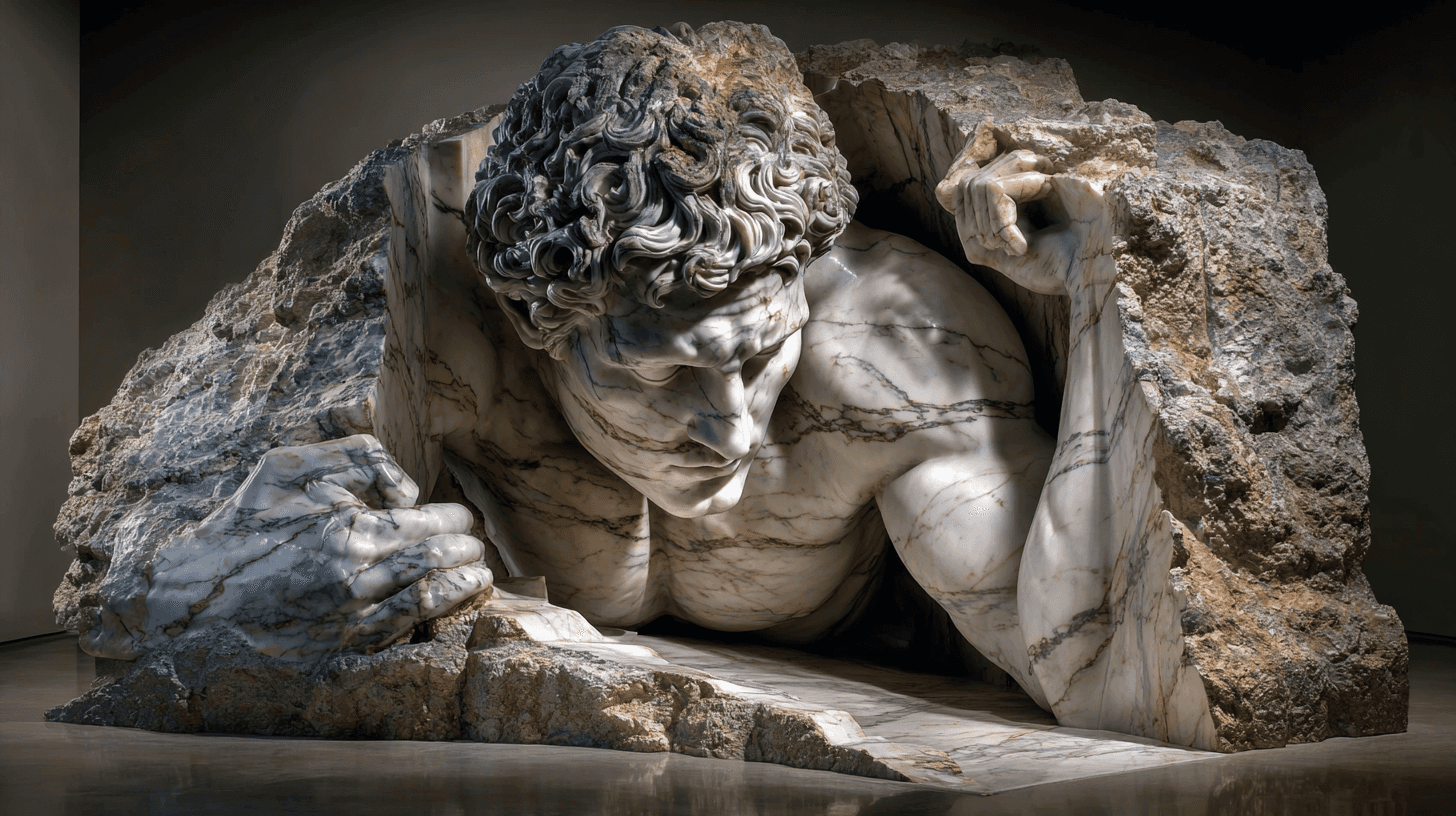
Closer in, the tension moves to the surface. The pale cracked crust and the dense mineral body underneath can be told apart, so a head, a shoulder or a pair of hands carries the whole idea.

Crust and body at close range
A head held inside the cracked crust
The seam between two materials
A face appearing from the crust
At this range the work is met rather than viewed: what holds attention is the line where one material becomes the other.
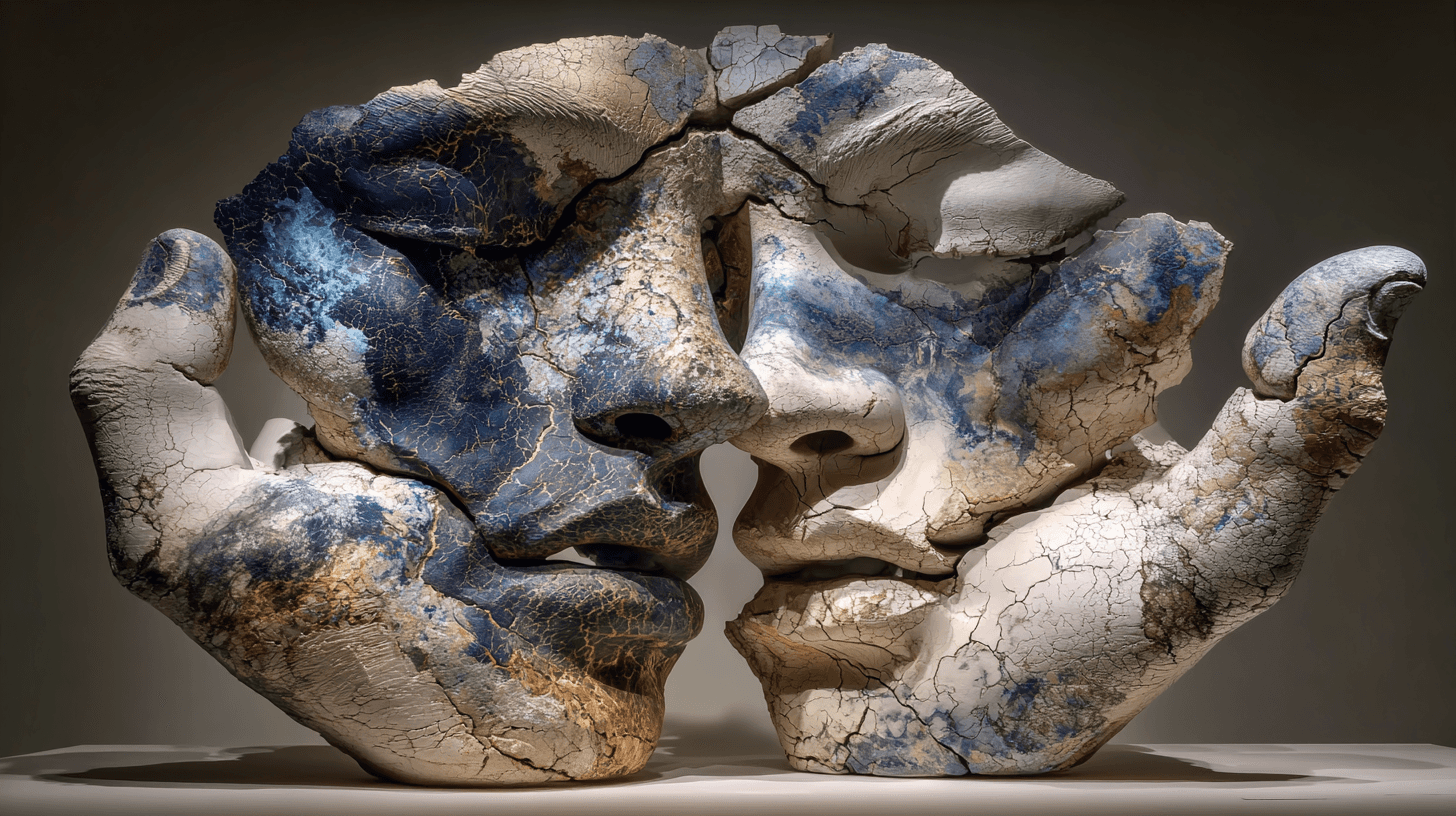
Two figures in the same condition, facing each other
Set face to face, the relation is no longer only between a body and its own stone. Two figures in the same condition, and the distance between them, are read together.
04The piece itself

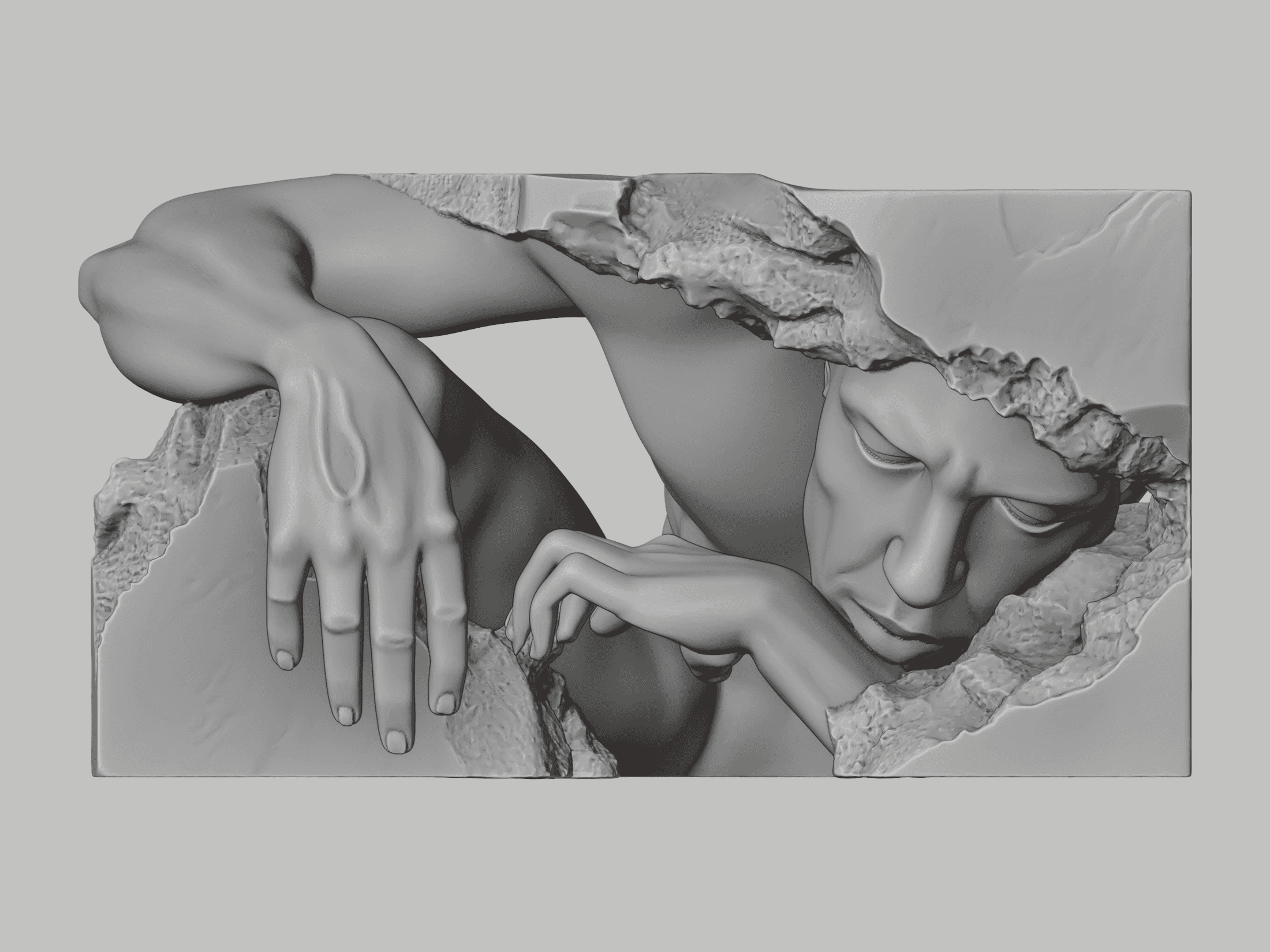
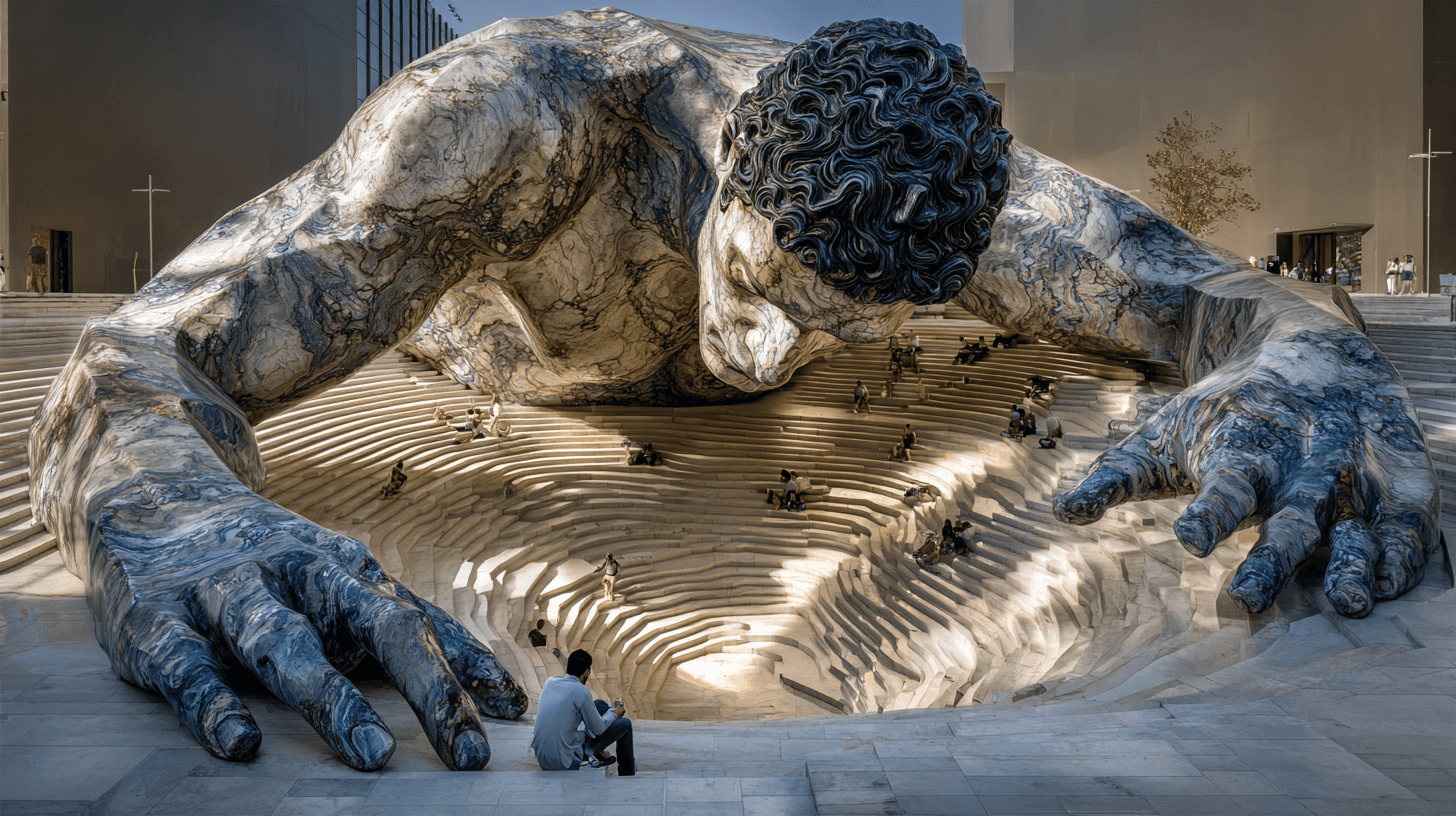
Two arms and a lowered head define a space between them. With a person beside it that space takes on a measure, and the work changes from something you stand in front of to something you move around. The model at the top of this page is the same piece, turned by hand.

The piece itself, the body inside a single mass
05Material and scale

Materialandscale,asfarastheyhavebeendecided.

This is a study rather than a built work. What is fixed is the material family and the size the studies assume, and both are set so the piece is met from underneath and from a distance.

MaterialStone, read as marble in the studies
Working height4.5 m
Proportions at that heightAbout 8.3 m across and 6.7 m deep
StatusStudy. Not produced or exhibited
These are the decisions the studies assume, kept deliberately short so that nothing is claimed that has not been decided.
H 4.5 mThe piece seen with a person standing beside it
The piece at working heightAt 4.5 m a person stands below the point where the body leaves the mass, so the work is read from underneath and the ground around it carries as much of the design as the elevation.
06Three views of the study model

Threeviewsofthesamestudymodel,atonescaleandwithoutshadingtricks.

They are here so the form can be checked rather than admired.

01Three quarter
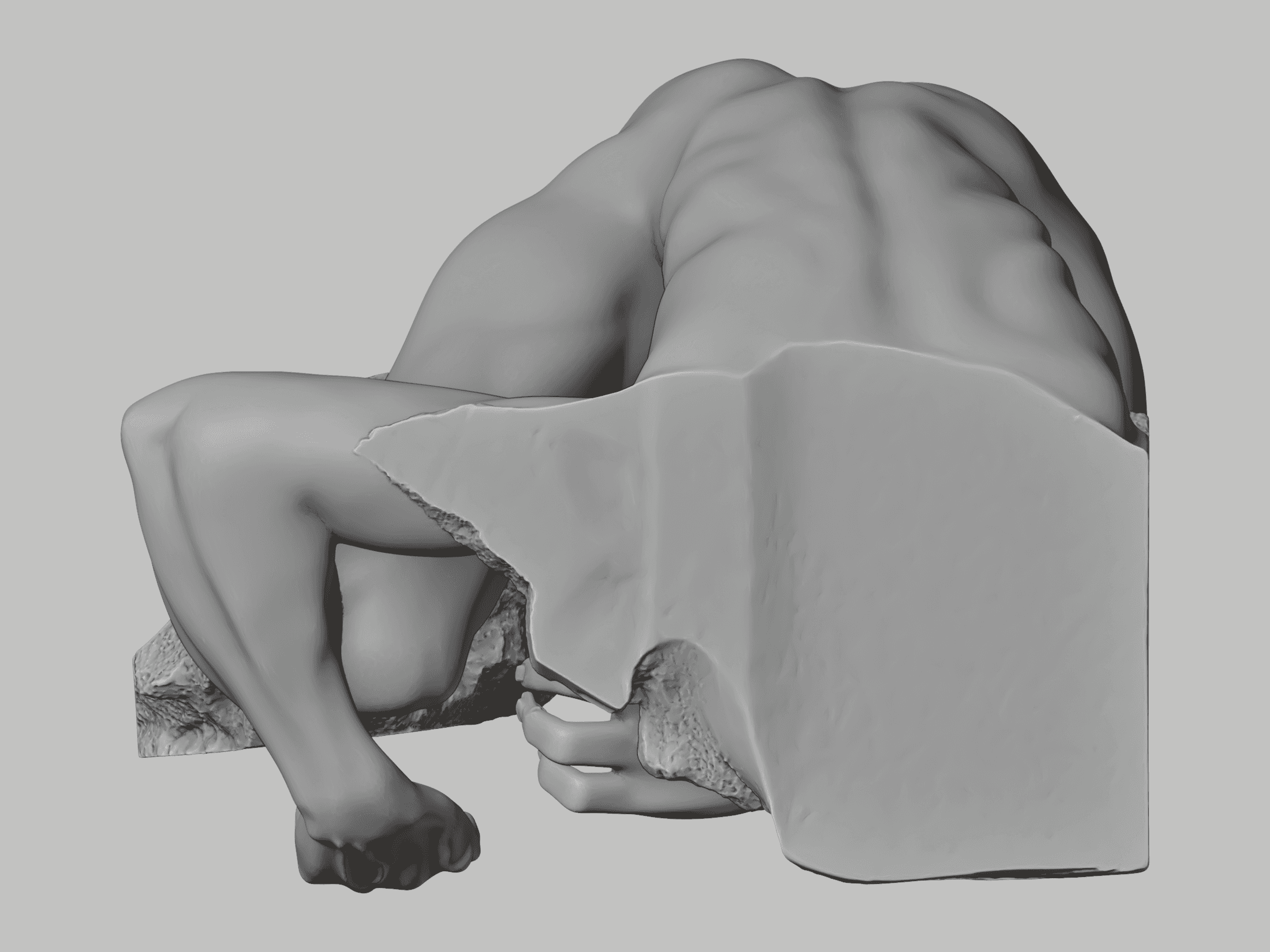
Where the mass ends and the body begins.
02Front
How far the body comes out before the stone takes over.
03Plan
How much of the figure survives when it is read from above.
01Three quarter view of the study model
02Front view of the study model
03Plan view of the study model
This is a working three dimensional study, which is why everything that follows is an interpretation rather than a record.
07Walking inside it

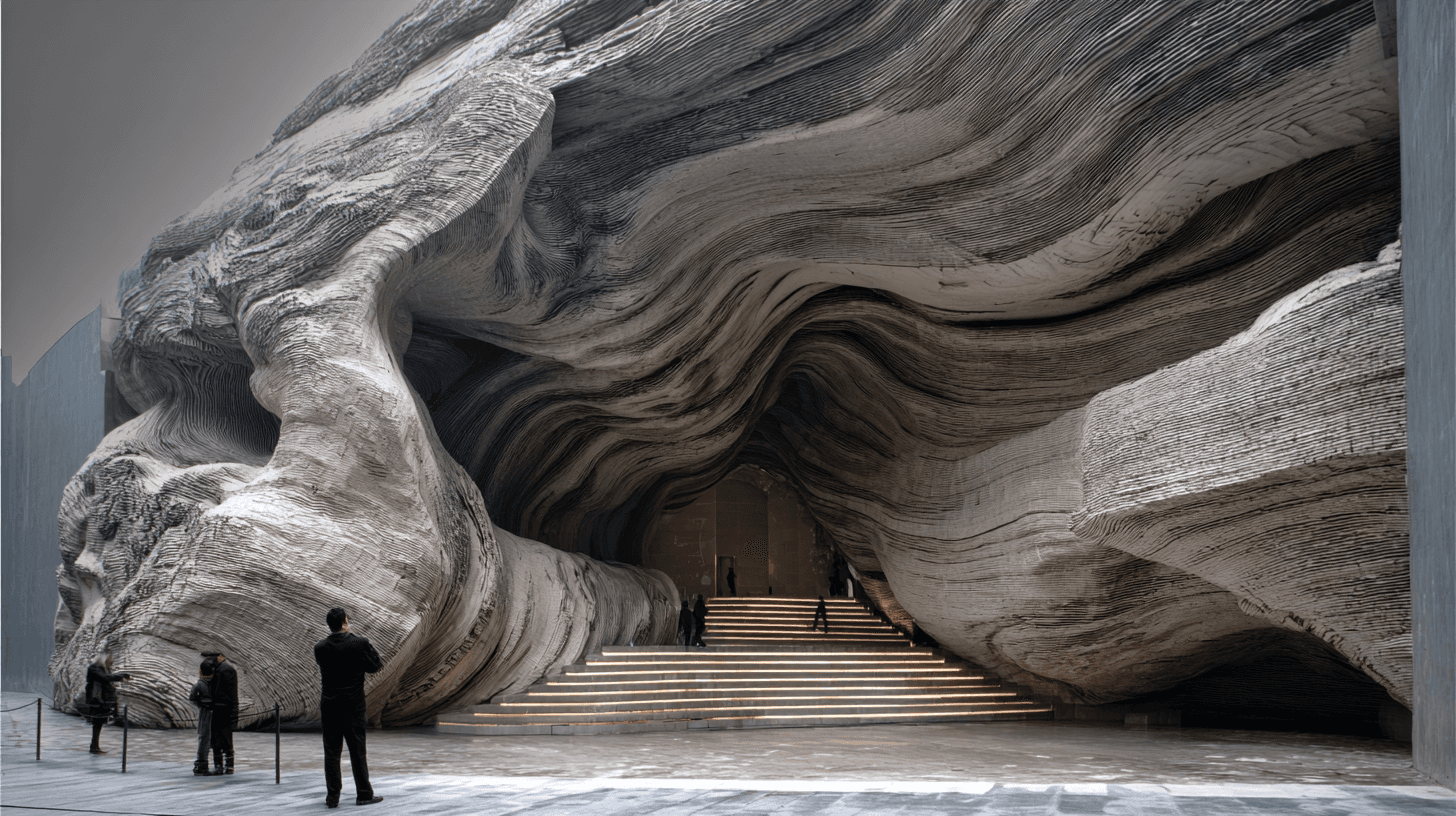
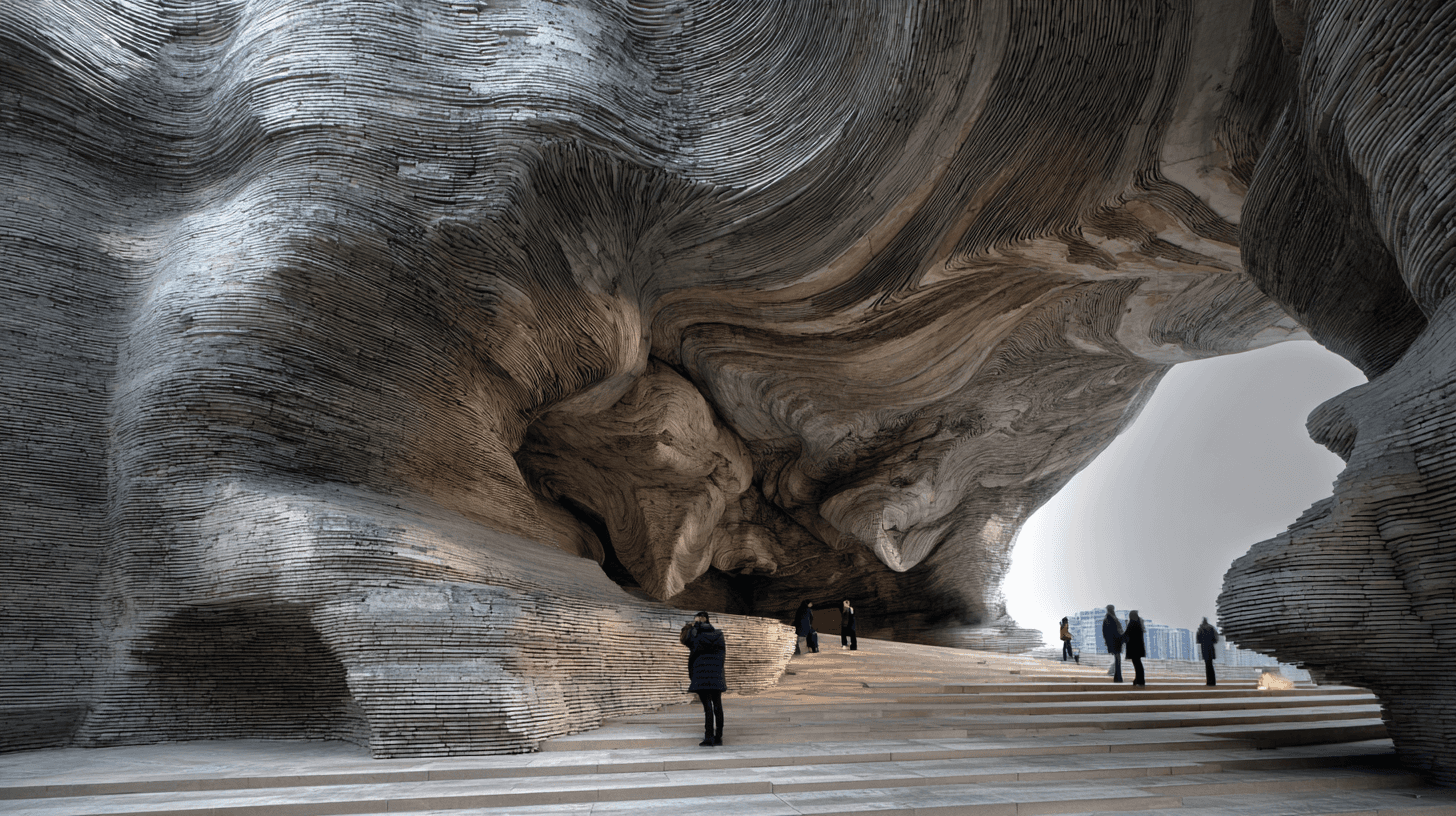
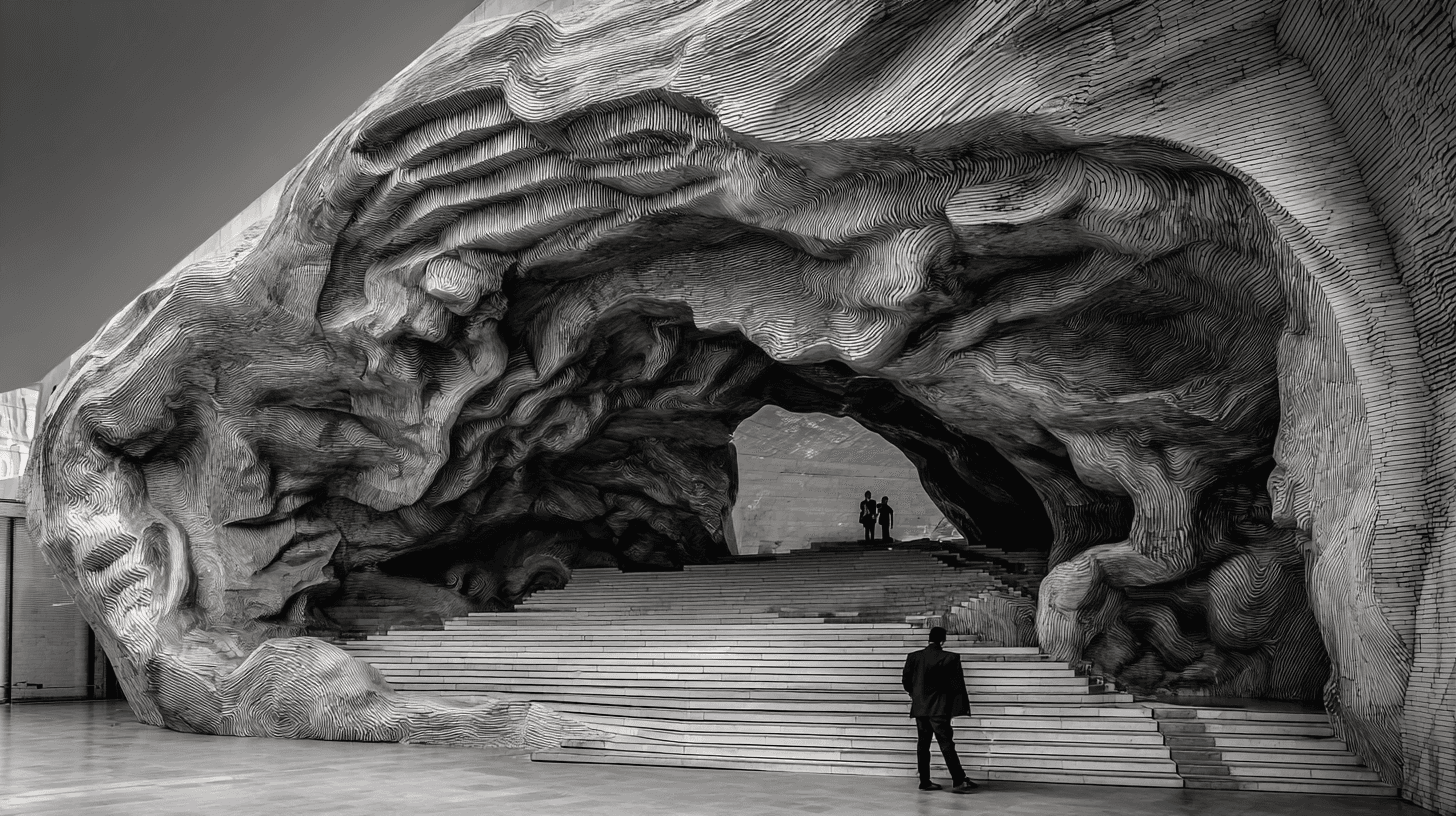
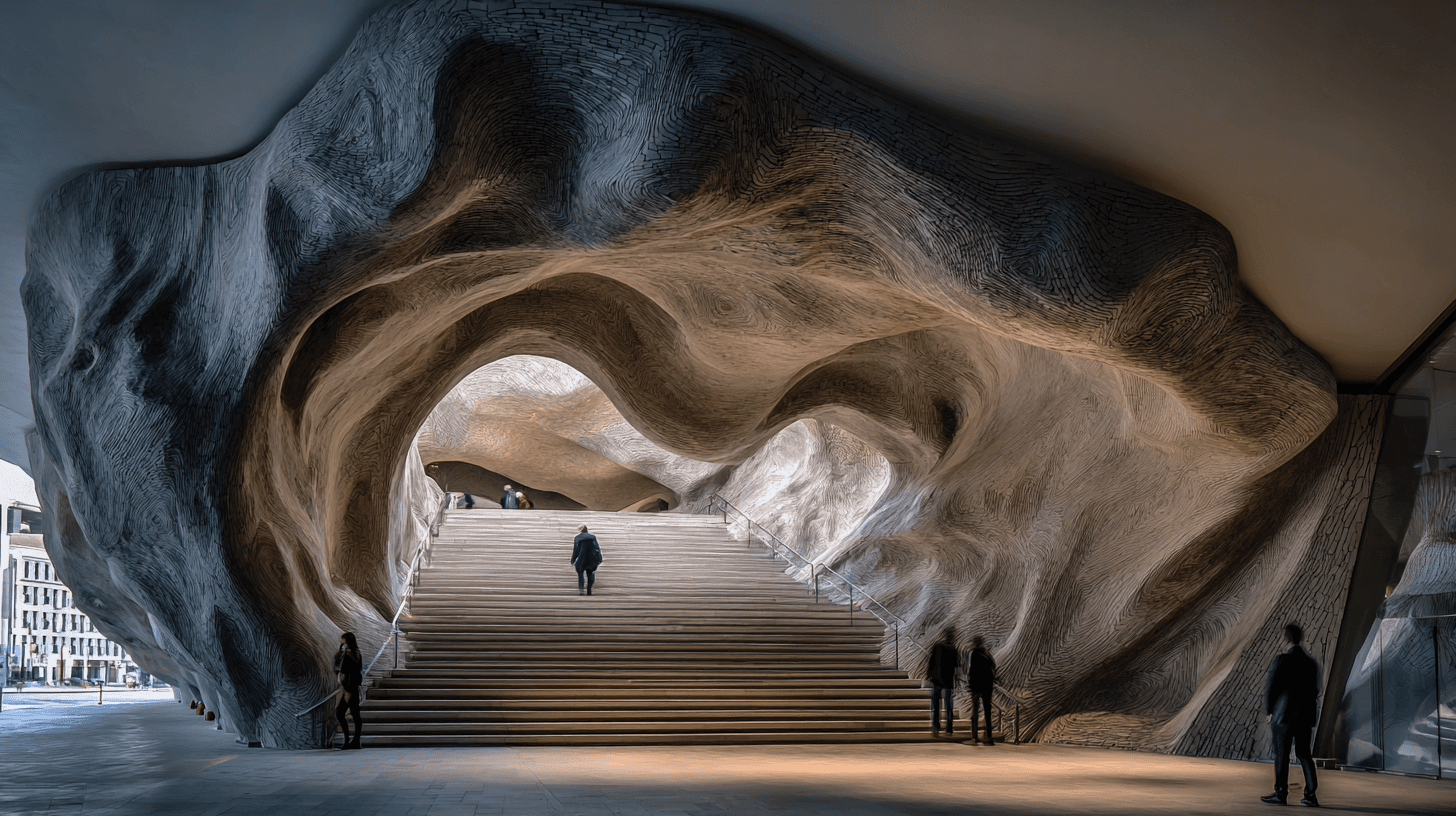
At building size the same idea starts changing how a person moves. The opening under an arm behaves like a passage and the underside of a shoulder like a cover overhead, so you are no longer in front of the work but inside it. You see detail instead of the whole, and what you take away is a route rather than an image.

A passage under the arm
The same opening from the other side
Entered from the side, the gap under the arm reads as a way through.
Interior of the mass, approached
Passing under the mass
Standing in the shade of the mass
Reaching daylight again
Four interiors, read as one walk: coming up to it, passing under, standing in the shade of the mass, and reaching daylight again.
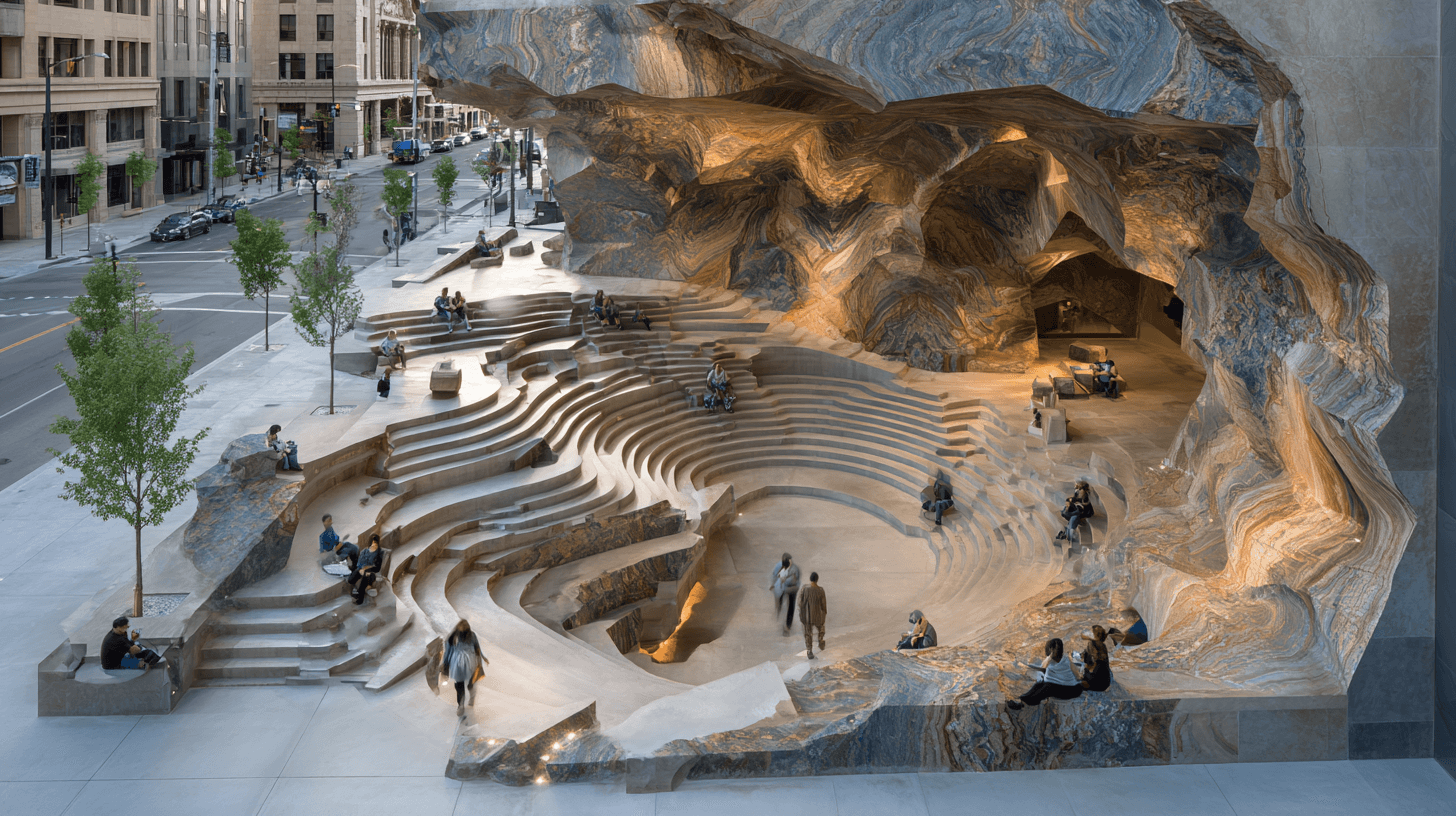
The section behaving like steps
The work meeting the street
Where the interior meets daylight the section becomes steps, a threshold and somewhere to sit.
08In the city

Inpublicspacestoneisalwaysgivenajob:astep,afloor,asurfacewithitslimitsalreadydecided.

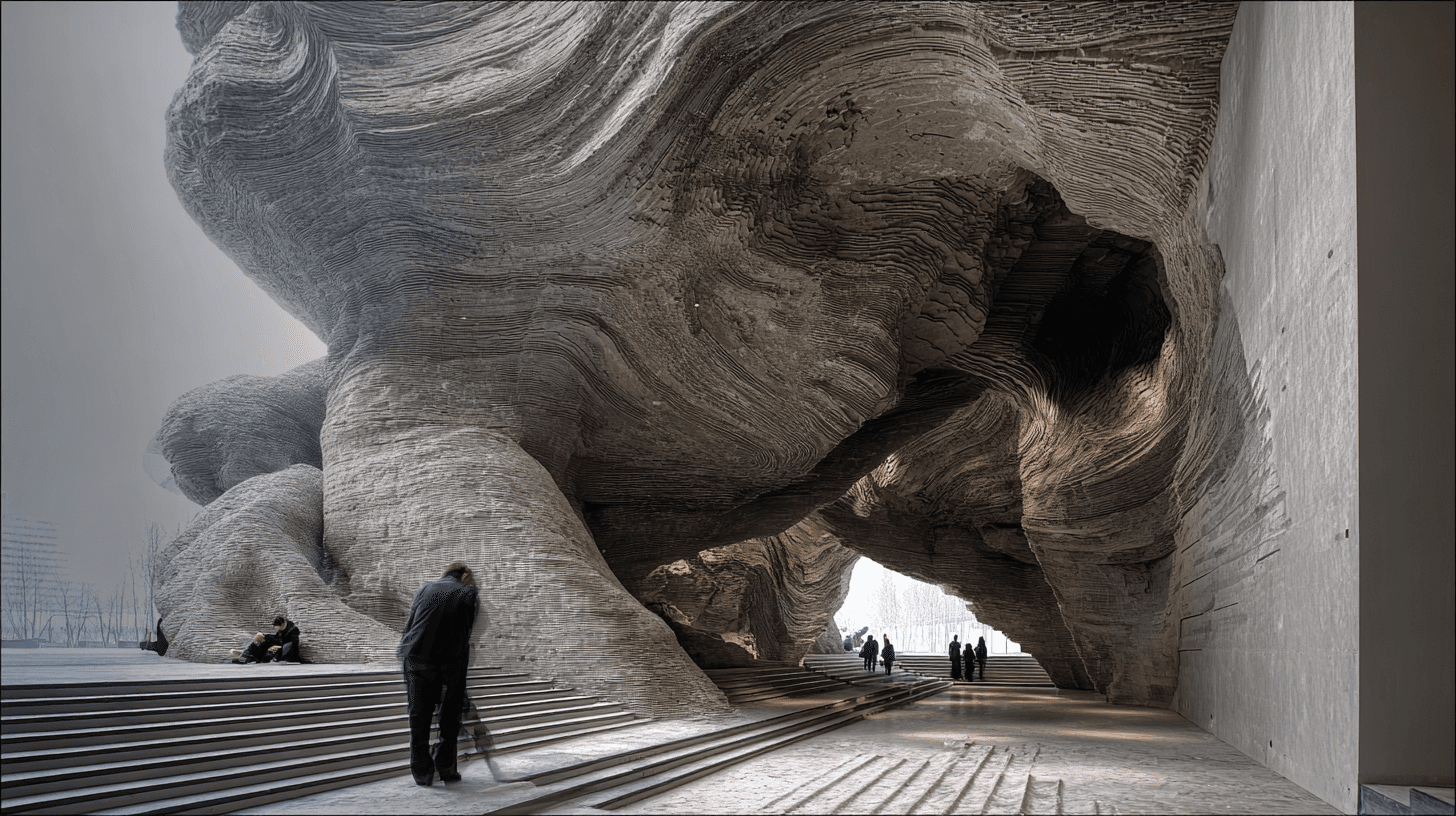
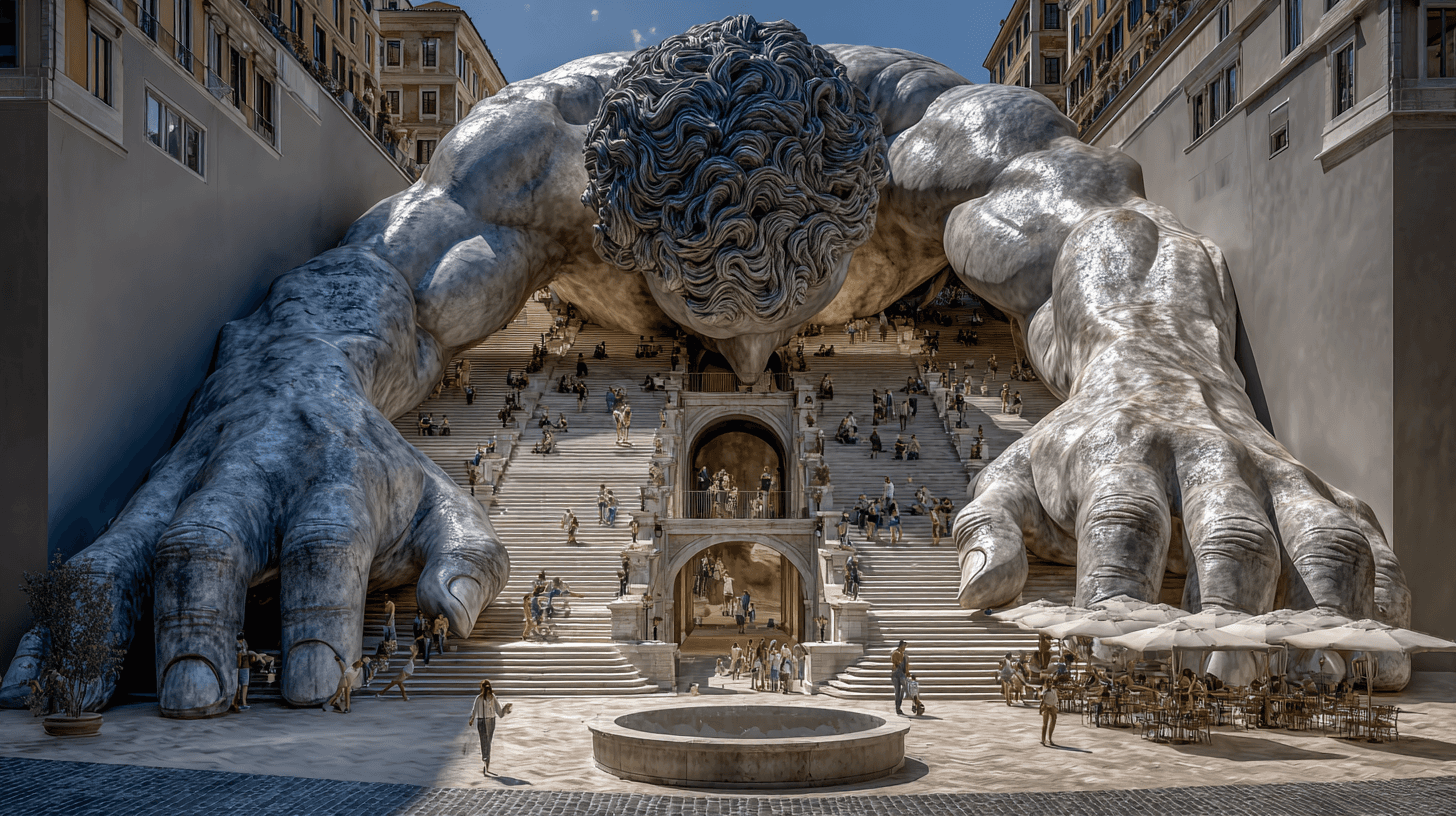
The figure rising between the steps steps outside that job without giving up the city. It is still a stair and still a floor, and it is also a body. People sit on the surfaces it has turned into, use its steps, and pass through its openings to reach the buildings beside it. This is where something that re-forms itself finds a place in shared life.

The figure coming up between the steps, in motion.
Going down into the work
Here you go down into the work and stay in it. The arms hold the edges, the floor steps away under you, and the sky is the only thing left open.
The whole relation read from above
The terraced hollow in use
The same ground twice: read from above as a plan, and filled with people using it. The second is what the first was for.
Passing under the work at street level
At street level it becomes a way through. It meets the buildings on either side, and the ordinary life of the square carries on under it.
Public study · Working model

Turn it, or let the page turn it. From the front the head and the hands set the outer edge of the ground; as the view lifts, the same relation reads as a plan with a floor stepping down to one centre.

01

This begins with the weight of existing.

02

And asks what the material carrying that weight could become.

03

Sometimes a body. Sometimes an opening. Sometimes a ground that people live on.

Matterisnotobligedtokeeptheshapeitwasgiven.

Credits
ProjectNon Finito
CategoryArt Installation
TypeIndependent Study
Year2026
Design and creative directionFulin Sezgin
Digital sculptureFulin Sezgin
3D and visual developmentFulin Sezgin
StatusNot produced or exhibited
Independent study. Developed through written specification, iterative image study, three dimensional translation and scale testing. Not produced or exhibited.
01Weight, and what is still appearing

Thesestudiesbeginwithweight,andwithsomethingstillappearinginsideit.

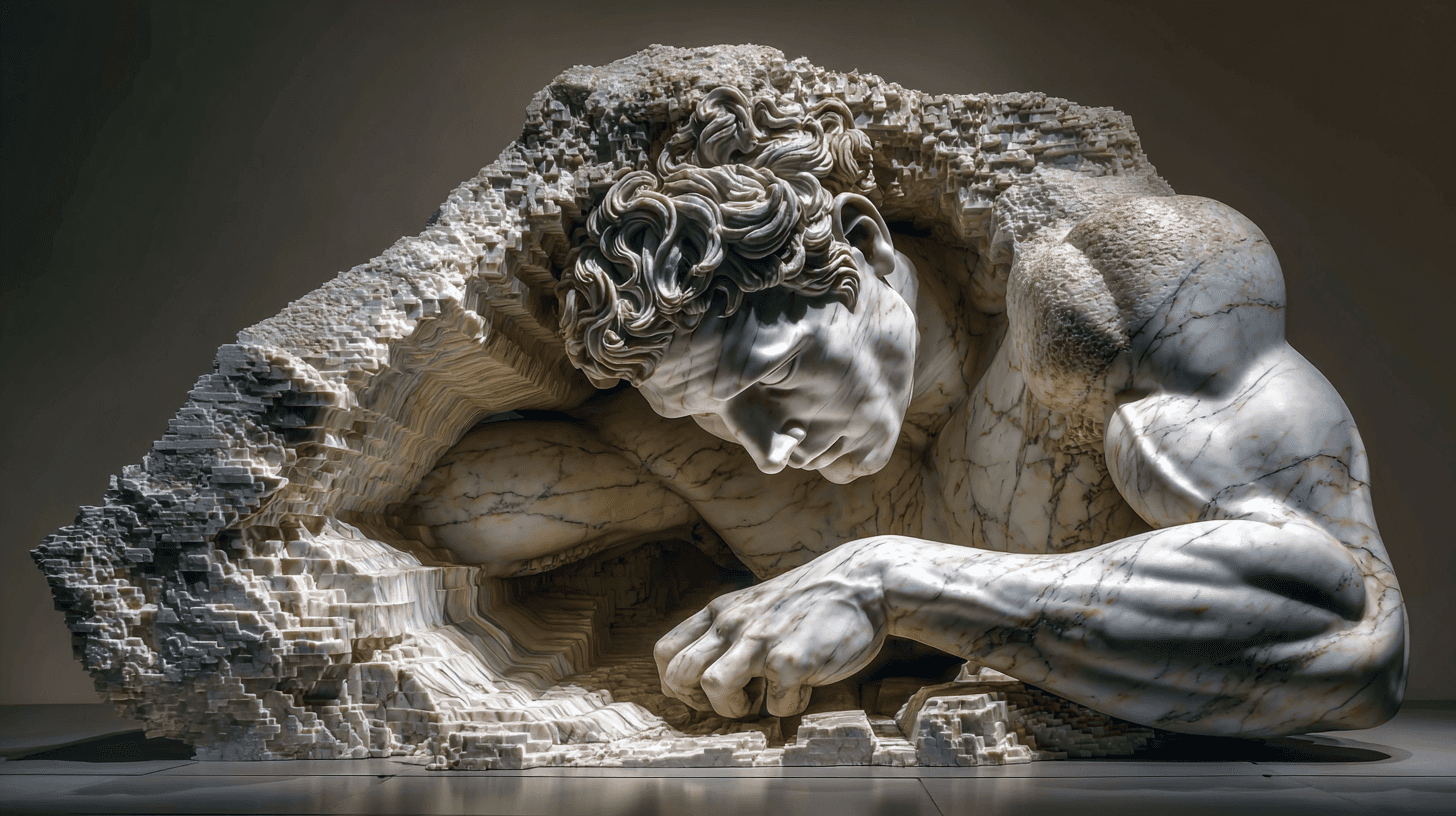
The body sits low in the mass it carries, head down, shoulders under the load. That is the weight of existing. In the same frame the figure is still arriving: in one place the form has resolved, in another it is still material. Non finito, here, is both of those being visible at once.

A body low inside the mass it carries

Nothing in these pieces is settled yet. The surface changes as it travels, from stone to body and back again, and the state it is caught in matters more than the pose. What is unfinished is not missing. It is still open.

The surface moving between stone and body
02What the material could become

I imagine the stone remembering itself, and beginning to explore the forms it could take. Each study holds that idea at a different intensity: what the material has been given, and what it is starting to become, stay in the same frame.
01/ 04Pressure
Pressure
Turning
Cover
Spreading
The mass still holds almost all of it. The figure reads as a force inside the stone rather than a shape on it.
03Close to the surface

Closer in, the tension moves to the surface. The pale cracked crust and the dense mineral body underneath can be told apart, so a head, a shoulder or a pair of hands carries the whole idea.

Crust and body at close range
A head held inside the cracked crust
The seam between two materials
A face appearing from the crust
At this range the work is met rather than viewed: what holds attention is the line where one material becomes the other.
Two figures in the same condition, facing each other
Set face to face, the relation is no longer only between a body and its own stone. Two figures in the same condition, and the distance between them, are read together.
04The piece itself

Two arms and a lowered head define a space between them. With a person beside it that space takes on a measure, and the work changes from something you stand in front of to something you move around. The model at the top of this page is the same piece, turned by hand.

The piece itself, the body inside a single mass
05Material and scale

Materialandscale,asfarastheyhavebeendecided.

This is a study rather than a built work. What is fixed is the material family and the size the studies assume, and both are set so the piece is met from underneath and from a distance.

MaterialStone, read as marble in the studies
Working height4.5 m
Proportions at that heightAbout 8.3 m across and 6.7 m deep
StatusStudy. Not produced or exhibited
These are the decisions the studies assume, kept deliberately short so that nothing is claimed that has not been decided.
H 4.5 mThe piece seen with a person standing beside it
The piece at working heightAt 4.5 m a person stands below the point where the body leaves the mass, so the work is read from underneath and the ground around it carries as much of the design as the elevation.
06Three views of the study model

Threeviewsofthesamestudymodel,atonescaleandwithoutshadingtricks.

They are here so the form can be checked rather than admired.

01Three quarter
Where the mass ends and the body begins.
02Front
How far the body comes out before the stone takes over.
03Plan
How much of the figure survives when it is read from above.
01Three quarter view of the study model
02Front view of the study model
03Plan view of the study model
This is a working three dimensional study, which is why everything that follows is an interpretation rather than a record.
07Walking inside it

At building size the same idea starts changing how a person moves. The opening under an arm behaves like a passage and the underside of a shoulder like a cover overhead, so you are no longer in front of the work but inside it. You see detail instead of the whole, and what you take away is a route rather than an image.

A passage under the arm
The same opening from the other side
Entered from the side, the gap under the arm reads as a way through.
Interior of the mass, approached
Passing under the mass
Standing in the shade of the mass
Reaching daylight again
Four interiors, read as one walk: coming up to it, passing under, standing in the shade of the mass, and reaching daylight again.
The section behaving like steps
The work meeting the street
Where the interior meets daylight the section becomes steps, a threshold and somewhere to sit.
08In the city

Inpublicspacestoneisalwaysgivenajob:astep,afloor,asurfacewithitslimitsalreadydecided.

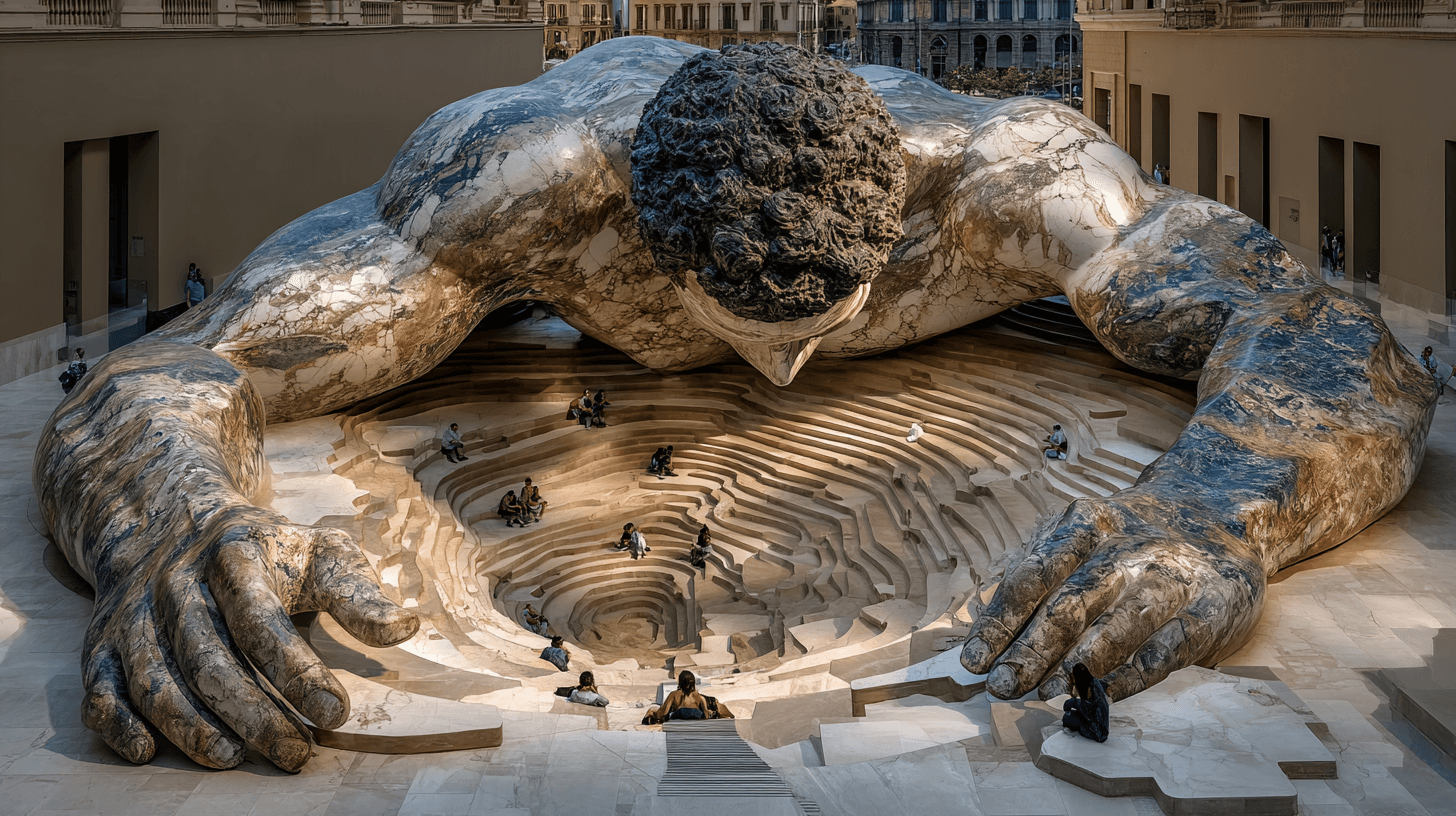
The figure rising between the steps steps outside that job without giving up the city. It is still a stair and still a floor, and it is also a body. People sit on the surfaces it has turned into, use its steps, and pass through its openings to reach the buildings beside it. This is where something that re-forms itself finds a place in shared life.

The figure coming up between the steps, in motion.
Going down into the work
Here you go down into the work and stay in it. The arms hold the edges, the floor steps away under you, and the sky is the only thing left open.
The whole relation read from above
The terraced hollow in use
The same ground twice: read from above as a plan, and filled with people using it. The second is what the first was for.
Passing under the work at street level
At street level it becomes a way through. It meets the buildings on either side, and the ordinary life of the square carries on under it.
Public study · Working model

Turn it, or let the page turn it. From the front the head and the hands set the outer edge of the ground; as the view lifts, the same relation reads as a plan with a floor stepping down to one centre.

01

This begins with the weight of existing.

02

And asks what the material carrying that weight could become.

03

Sometimes a body. Sometimes an opening. Sometimes a ground that people live on.

Matterisnotobligedtokeeptheshapeitwasgiven.

Credits
ProjectNon Finito
CategoryArt Installation
TypeIndependent Study
Year2026
Design and creative directionFulin Sezgin
Digital sculptureFulin Sezgin
3D and visual developmentFulin Sezgin
StatusNot produced or exhibited
Independent study. Developed through written specification, iterative image study, three dimensional translation and scale testing. Not produced or exhibited.
01Weight, and what is still appearing

Thesestudiesbeginwithweight,andwithsomethingstillappearinginsideit.

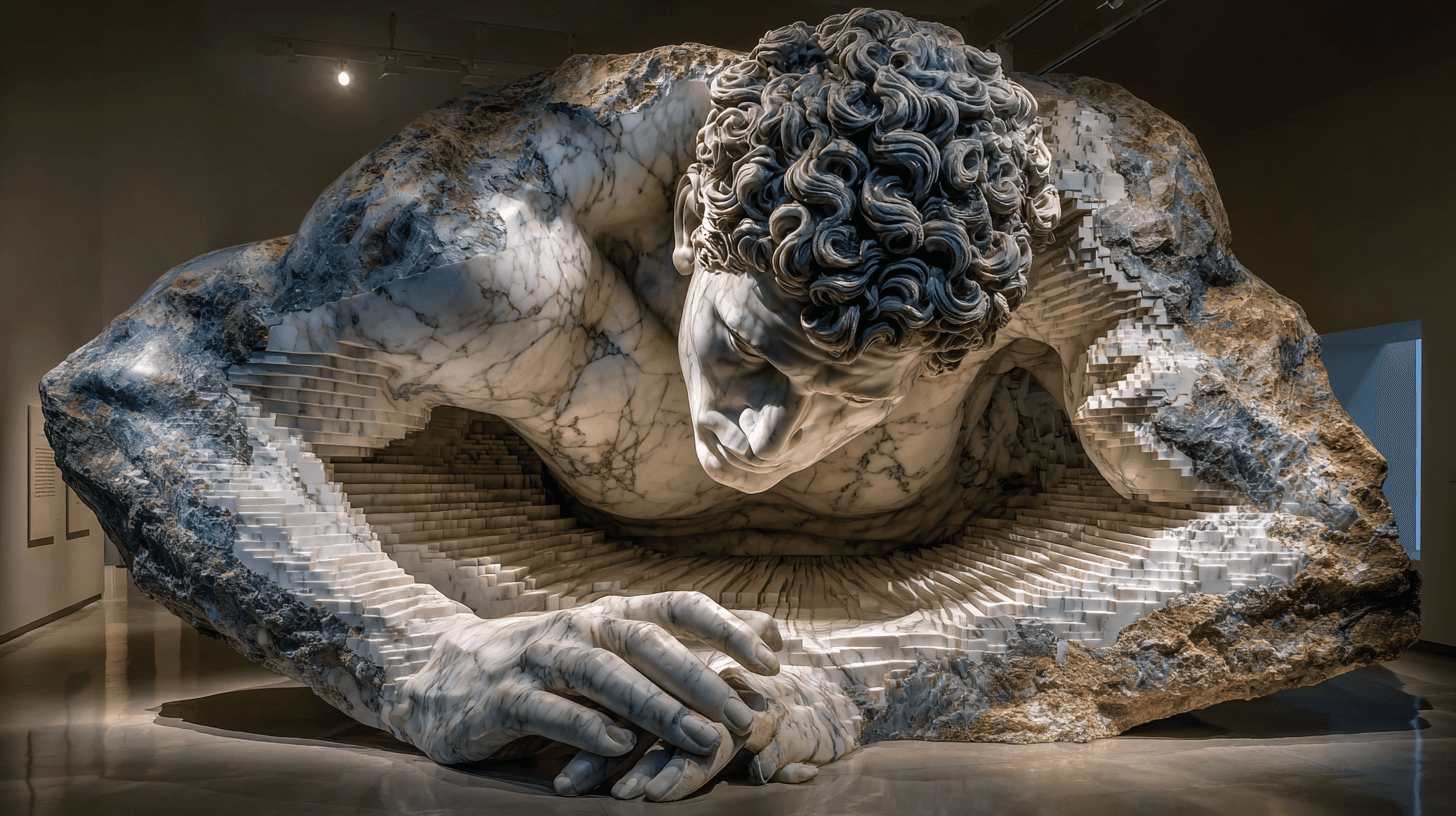
The body sits low in the mass it carries, head down, shoulders under the load. That is the weight of existing. In the same frame the figure is still arriving: in one place the form has resolved, in another it is still material. Non finito, here, is both of those being visible at once.

A body low inside the mass it carries

Nothing in these pieces is settled yet. The surface changes as it travels, from stone to body and back again, and the state it is caught in matters more than the pose. What is unfinished is not missing. It is still open.

The surface moving between stone and body
02What the material could become

I imagine the stone remembering itself, and beginning to explore the forms it could take. Each study holds that idea at a different intensity: what the material has been given, and what it is starting to become, stay in the same frame.
01/ 04Pressure
Pressure
Turning
Cover
Spreading
The mass still holds almost all of it. The figure reads as a force inside the stone rather than a shape on it.
03Close to the surface

Closer in, the tension moves to the surface. The pale cracked crust and the dense mineral body underneath can be told apart, so a head, a shoulder or a pair of hands carries the whole idea.
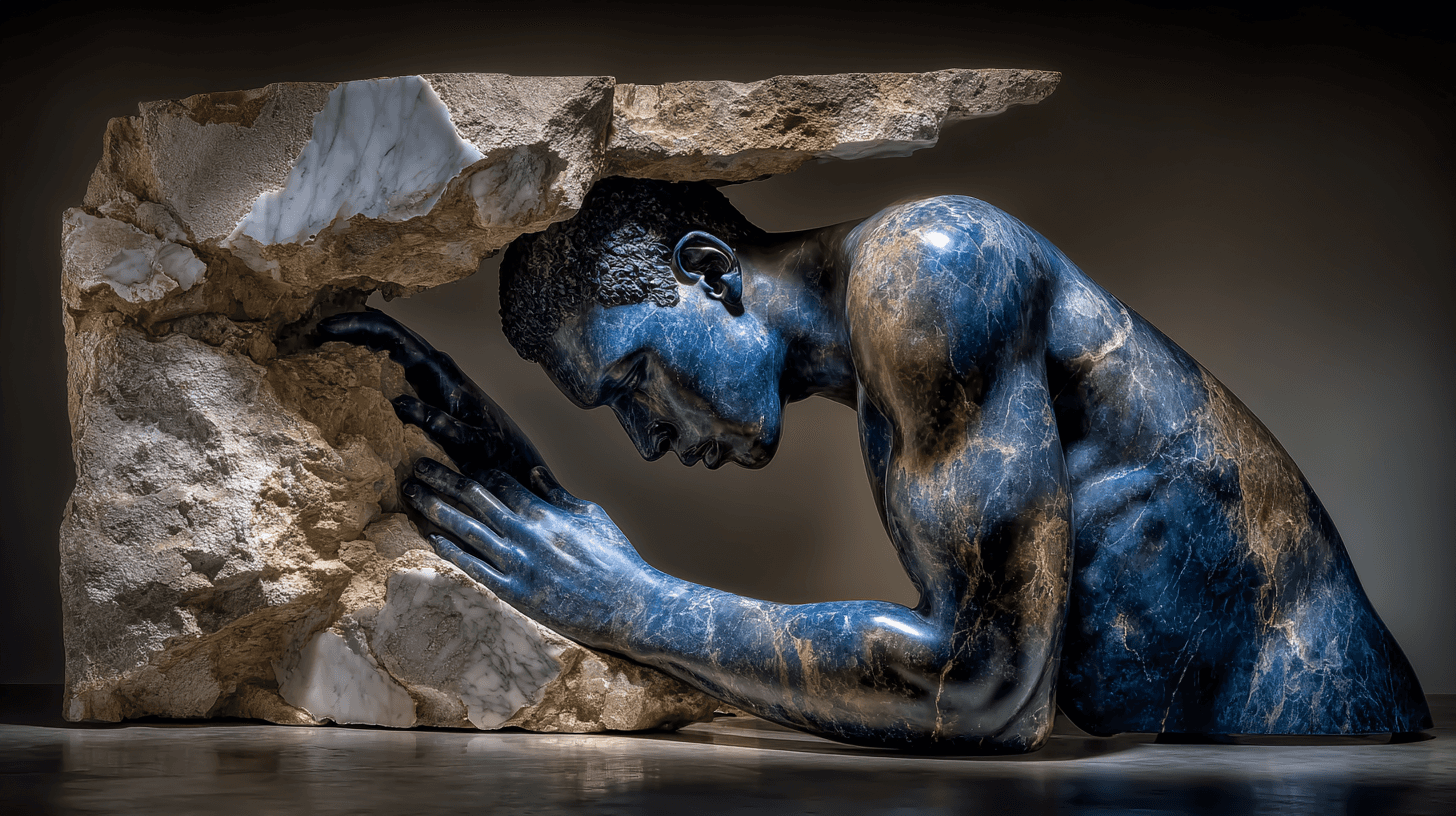
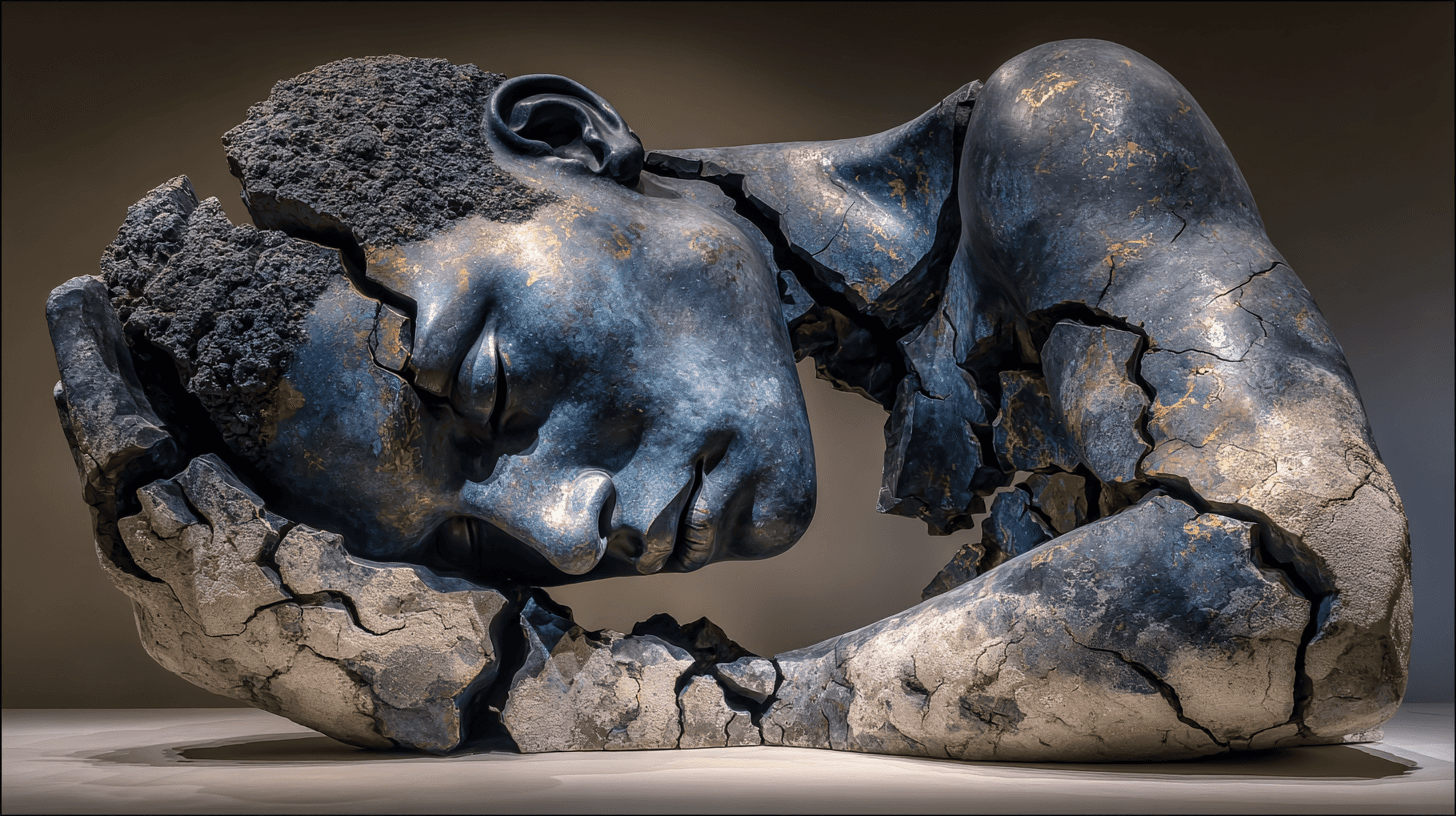
Crust and body at close range
A head held inside the cracked crust
The seam between two materials
A face appearing from the crust
At this range the work is met rather than viewed: what holds attention is the line where one material becomes the other.
Two figures in the same condition, facing each other
Set face to face, the relation is no longer only between a body and its own stone. Two figures in the same condition, and the distance between them, are read together.
04The piece itself

Two arms and a lowered head define a space between them. With a person beside it that space takes on a measure, and the work changes from something you stand in front of to something you move around. The model at the top of this page is the same piece, turned by hand.
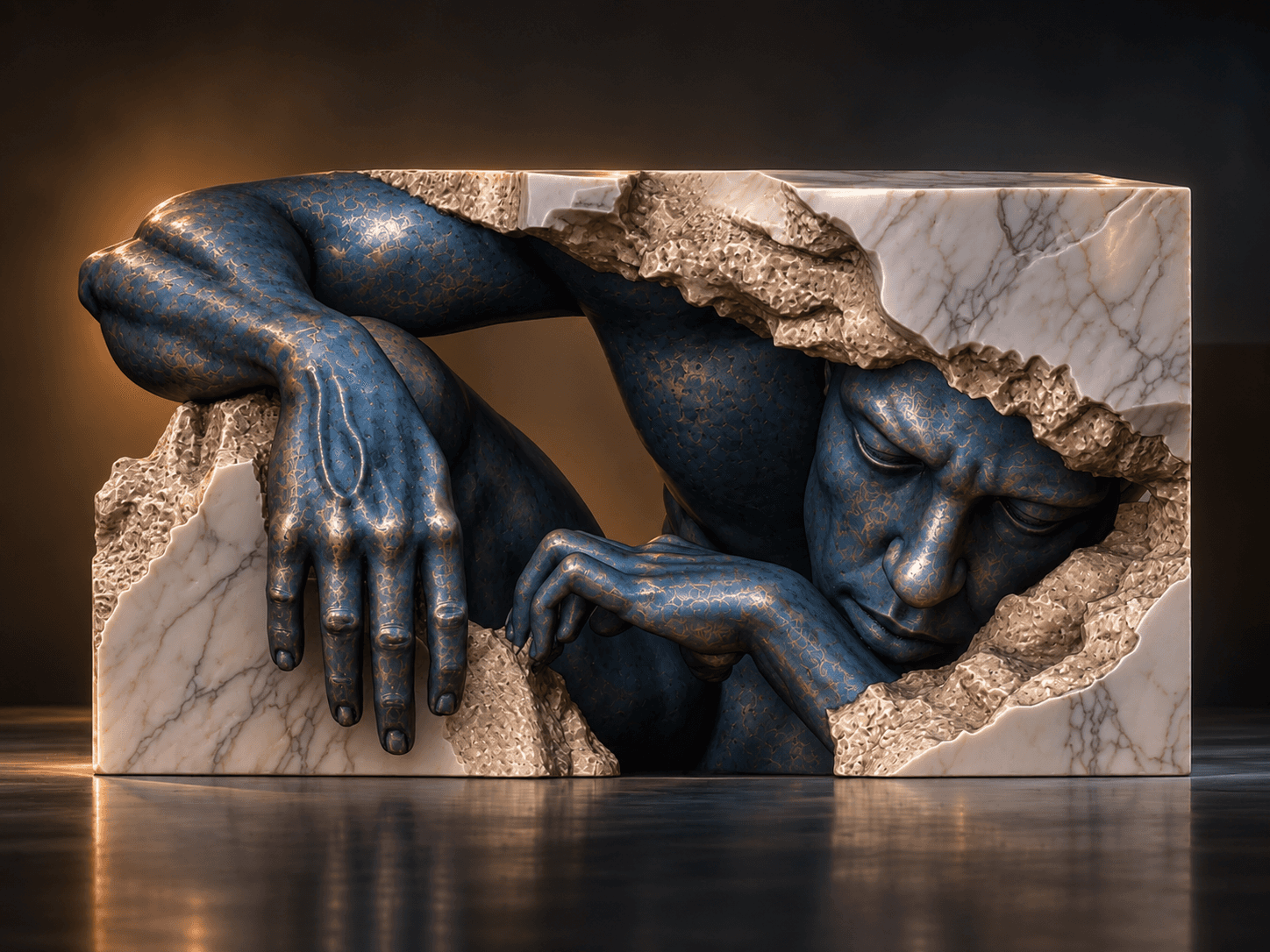
The piece itself, the body inside a single mass
05Material and scale

Materialandscale,asfarastheyhavebeendecided.

This is a study rather than a built work. What is fixed is the material family and the size the studies assume, and both are set so the piece is met from underneath and from a distance.
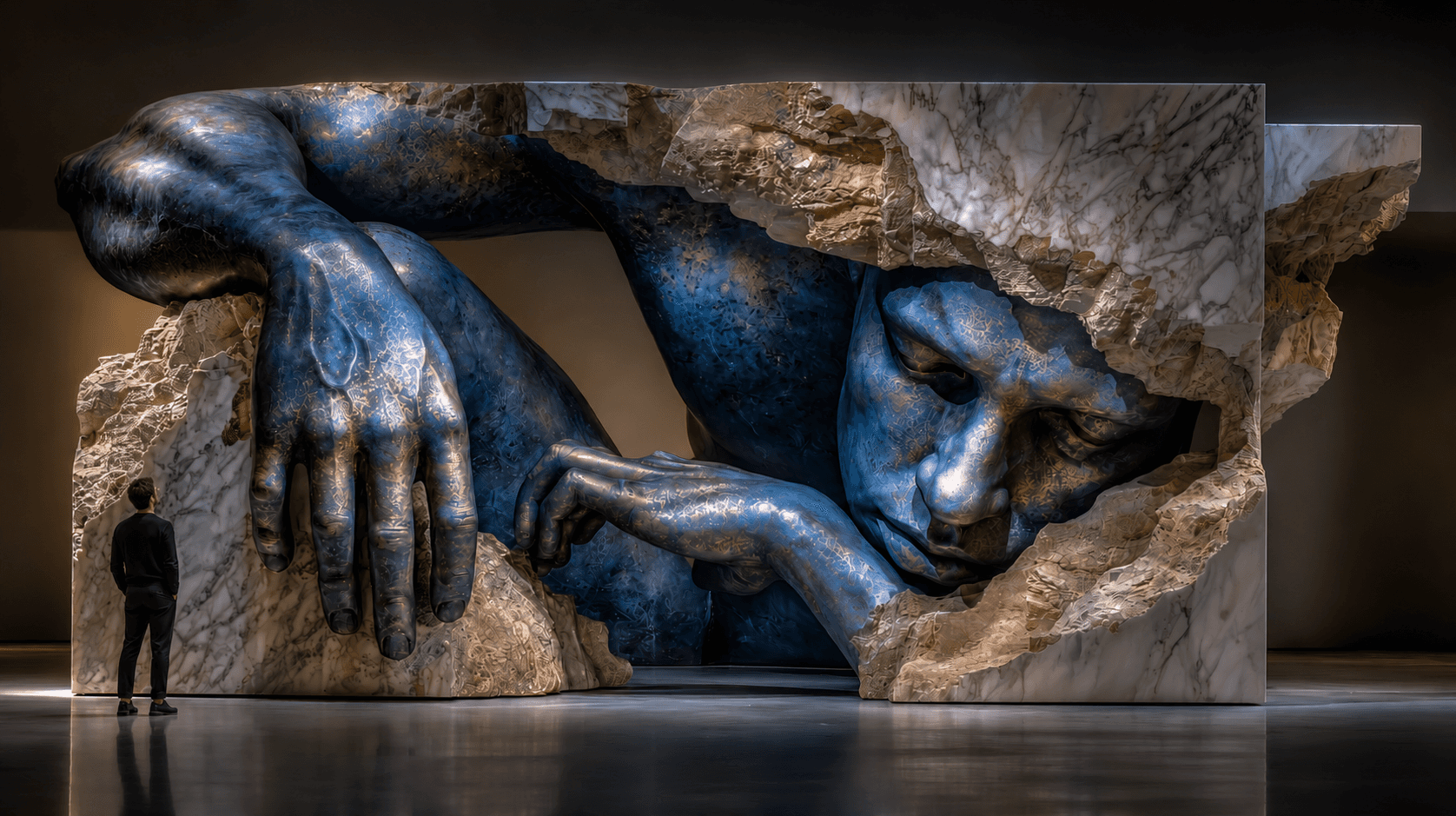
MaterialStone, read as marble in the studies
Working height4.5 m
Proportions at that heightAbout 8.3 m across and 6.7 m deep
StatusStudy. Not produced or exhibited
These are the decisions the studies assume, kept deliberately short so that nothing is claimed that has not been decided.
H 4.5 mThe piece seen with a person standing beside it
The piece at working heightAt 4.5 m a person stands below the point where the body leaves the mass, so the work is read from underneath and the ground around it carries as much of the design as the elevation.
06Three views of the study model

Threeviewsofthesamestudymodel,atonescaleandwithoutshadingtricks.

They are here so the form can be checked rather than admired.
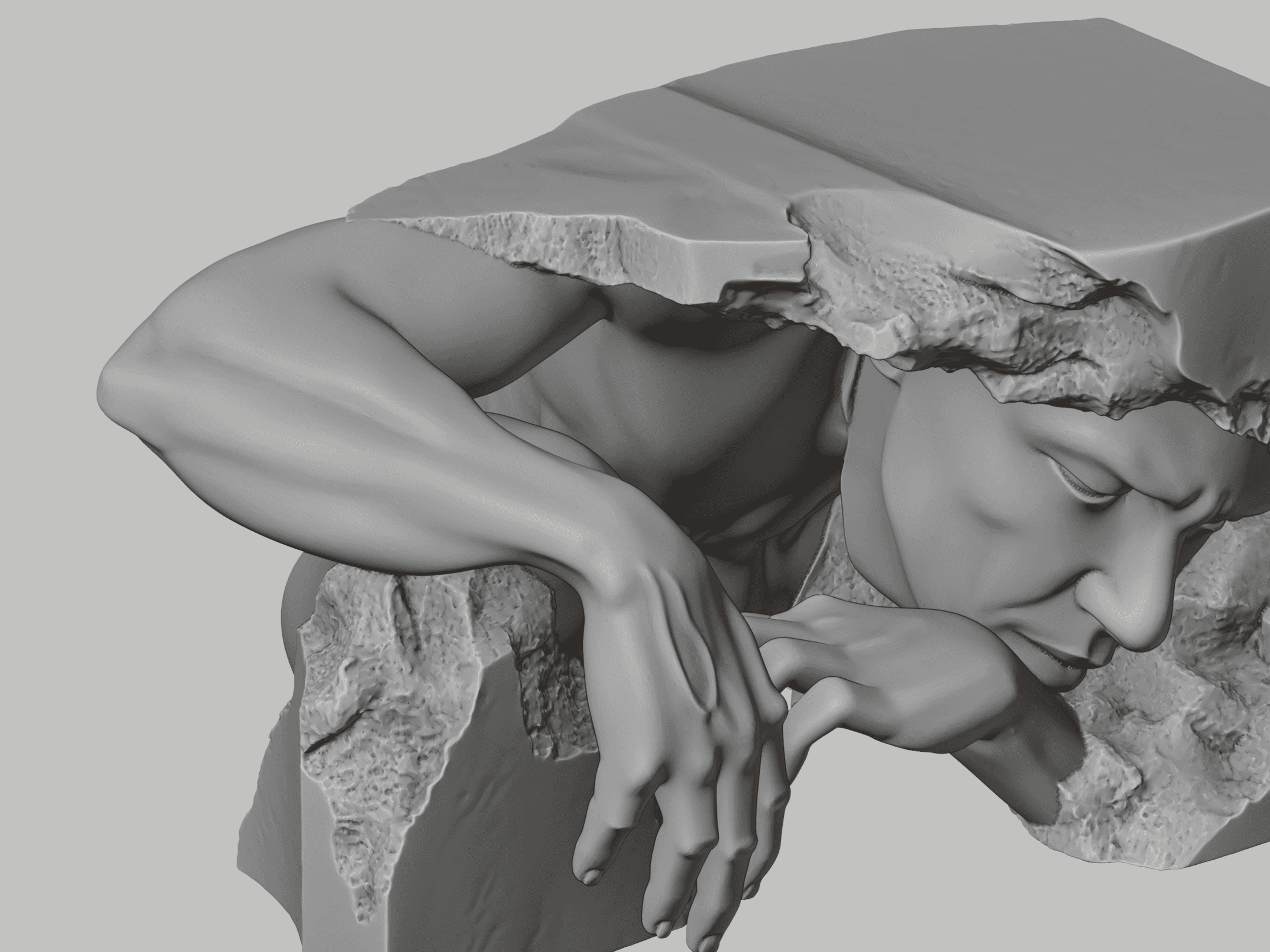
01Three quarter view of the study model
Three quarterWhere the mass ends and the body begins.
02Front view of the study model
FrontHow far the body comes out before the stone takes over.
03Plan view of the study model
PlanHow much of the figure survives when it is read from above.
This is a working three dimensional study, which is why everything that follows is an interpretation rather than a record.
07Walking inside it

At building size the same idea starts changing how a person moves. The opening under an arm behaves like a passage and the underside of a shoulder like a cover overhead, so you are no longer in front of the work but inside it. You see detail instead of the whole, and what you take away is a route rather than an image.
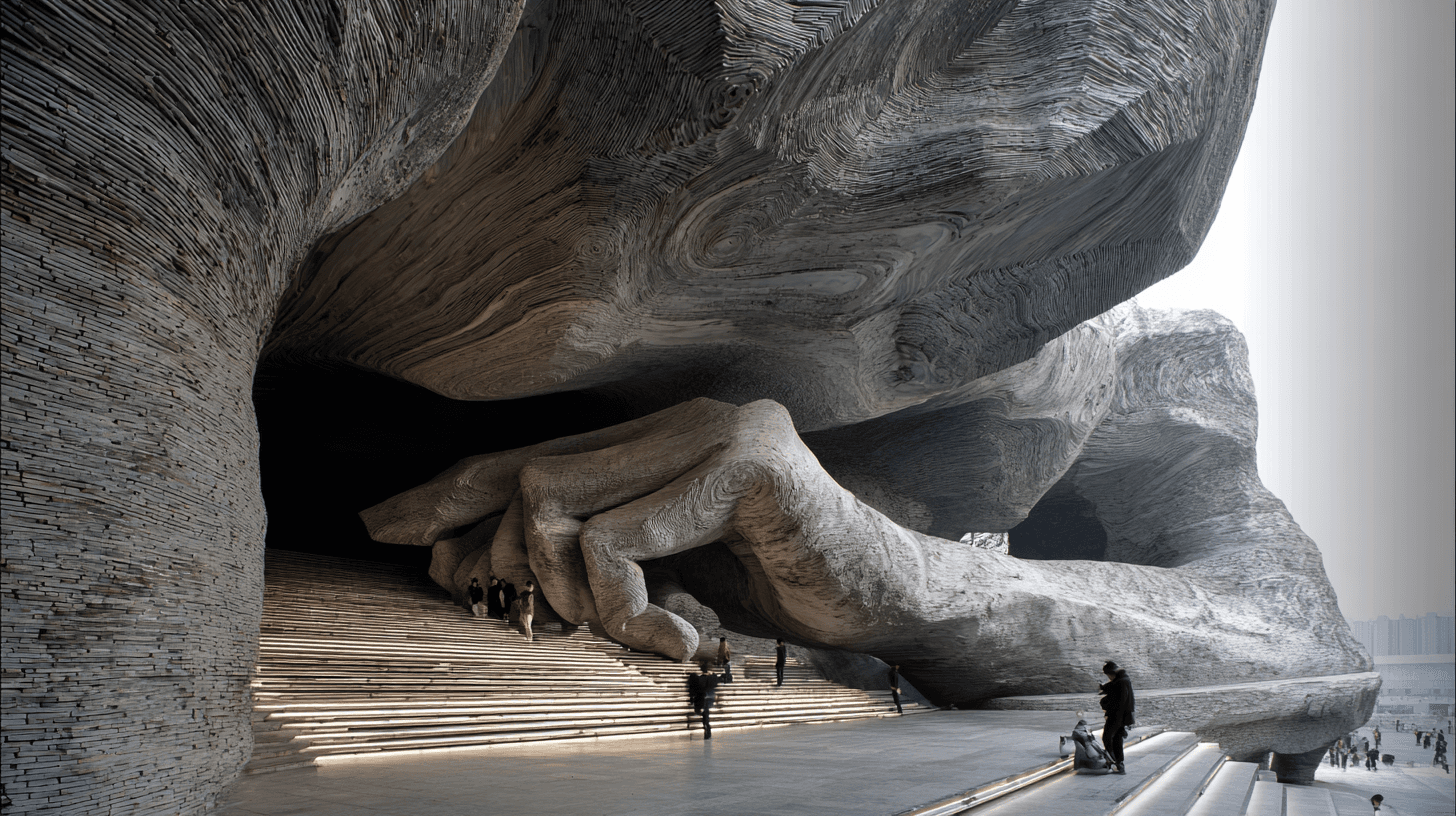
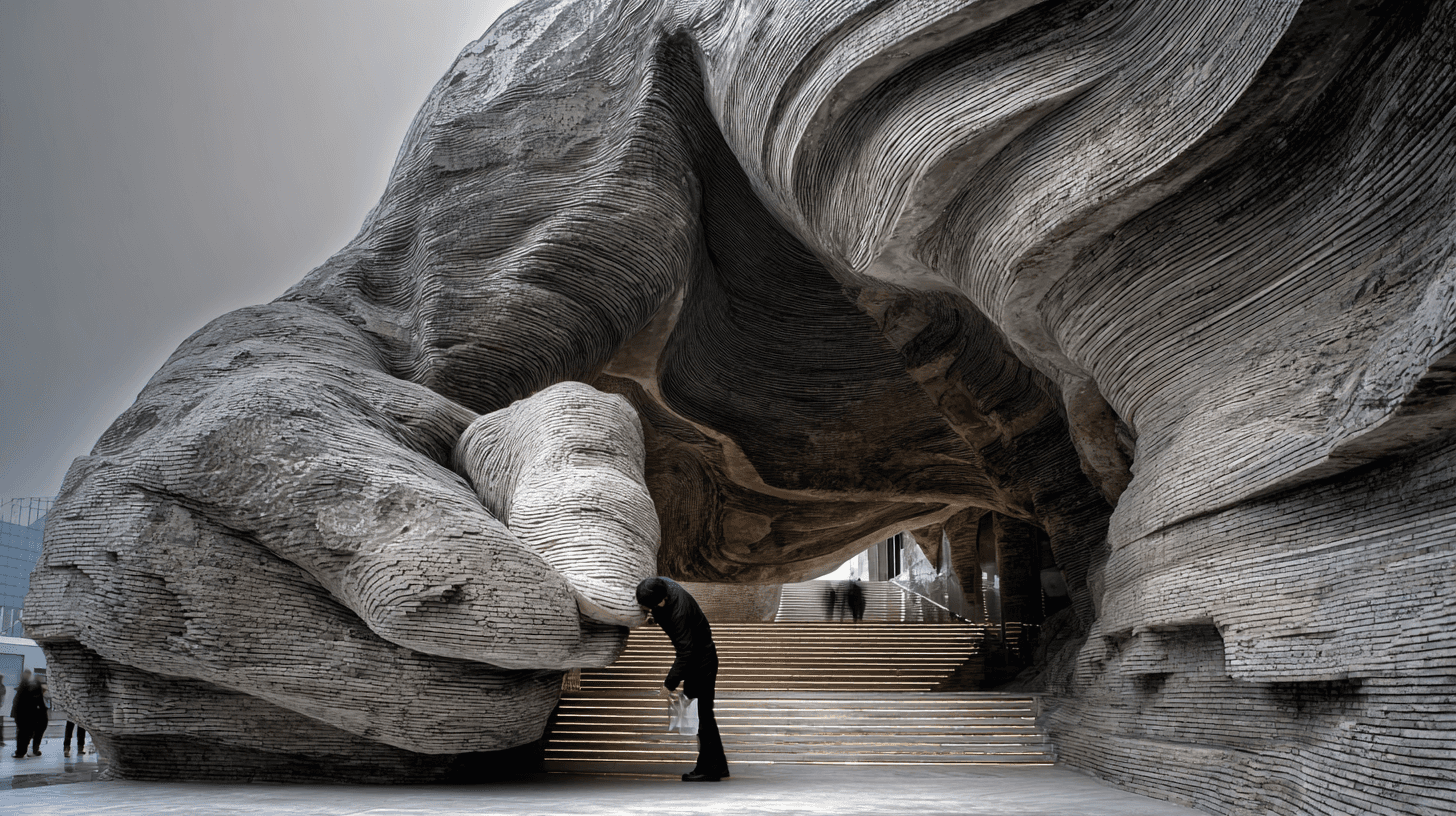
A passage under the arm
The same opening from the other side
Entered from the side, the gap under the arm reads as a way through.
Interior of the mass, approached
Passing under the mass
Standing in the shade of the mass
Reaching daylight again
Four interiors, read as one walk: coming up to it, passing under, standing in the shade of the mass, and reaching daylight again.
The section behaving like steps
The work meeting the street
Where the interior meets daylight the section becomes steps, a threshold and somewhere to sit.
08In the city

Inpublicspacestoneisalwaysgivenajob:astep,afloor,asurfacewithitslimitsalreadydecided.

The figure rising between the steps steps outside that job without giving up the city. It is still a stair and still a floor, and it is also a body. People sit on the surfaces it has turned into, use its steps, and pass through its openings to reach the buildings beside it. This is where something that re-forms itself finds a place in shared life.
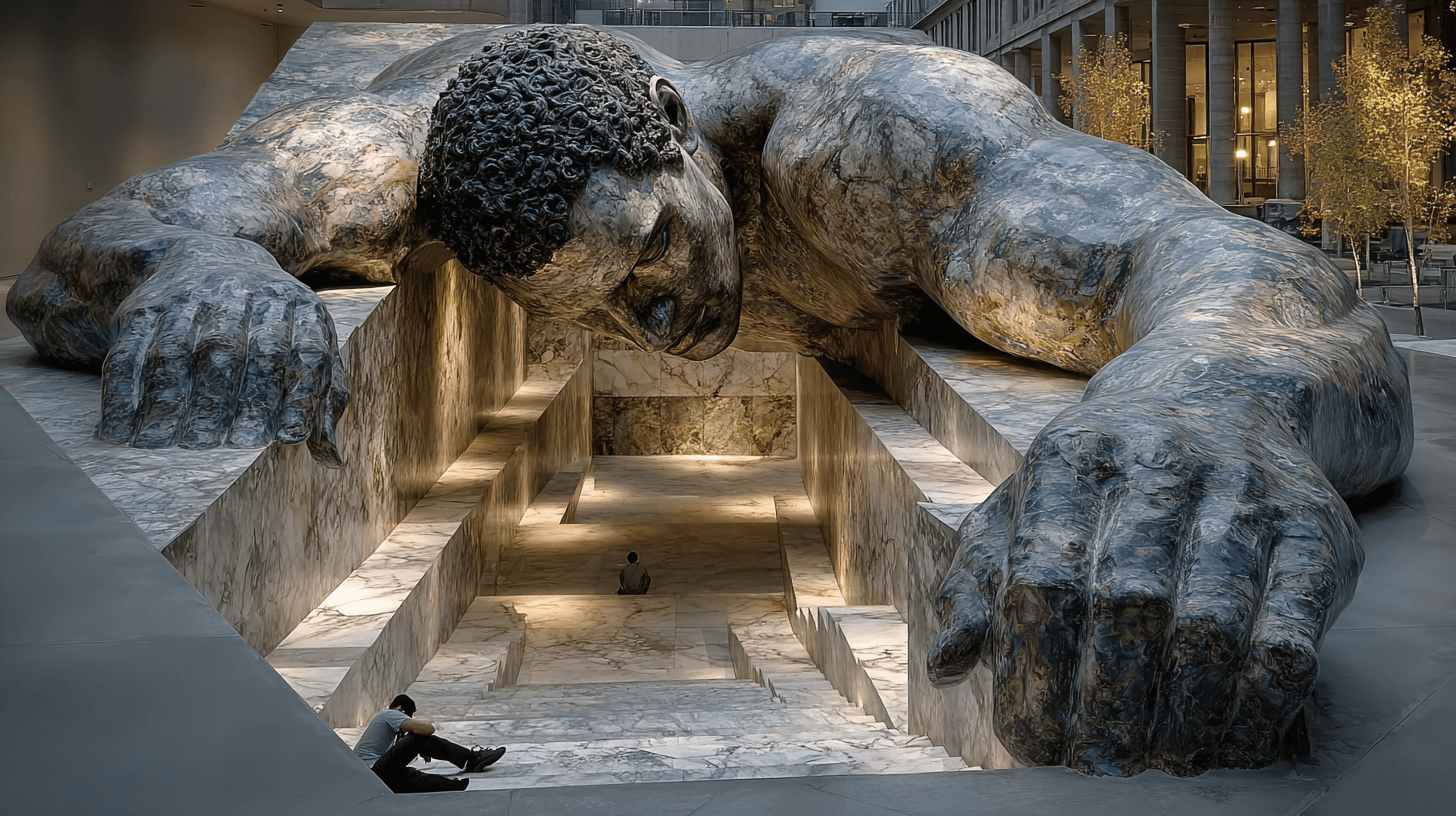
The figure coming up between the steps, in motion.
Going down into the work
Here you go down into the work and stay in it. The arms hold the edges, the floor steps away under you, and the sky is the only thing left open.
The whole relation read from above
The terraced hollow in use
The same ground twice: read from above as a plan, and filled with people using it. The second is what the first was for.
Passing under the work at street level
At street level it becomes a way through. It meets the buildings on either side, and the ordinary life of the square carries on under it.
Public study · Working model

Turn it, or let the page turn it. From the front the head and the hands set the outer edge of the ground; as the view lifts, the same relation reads as a plan with a floor stepping down to one centre.

01

This begins with the weight of existing.

02

And asks what the material carrying that weight could become.

03

Sometimes a body. Sometimes an opening. Sometimes a ground that people live on.

Matterisnotobligedtokeeptheshapeitwasgiven.

Credits
ProjectNon Finito
CategoryArt Installation
TypeIndependent Study
Year2026
Design and creative directionFulin Sezgin
Digital sculptureFulin Sezgin
3D and visual developmentFulin Sezgin
StatusNot produced or exhibited
Independent study. Developed through written specification, iterative image study, three dimensional translation and scale testing. Not produced or exhibited.

COLOPHON

COLOPHON

I believe the most memorable spaces are the ones people continue to feel long after they've left.

I believe the most memorable spaces are the ones people continue to feel long after they've left.

© 2026